The Inland Empire Is One of the Highest-Risk Cargo Corridors in the Country. Here's How Facilities Here Stay Protected.
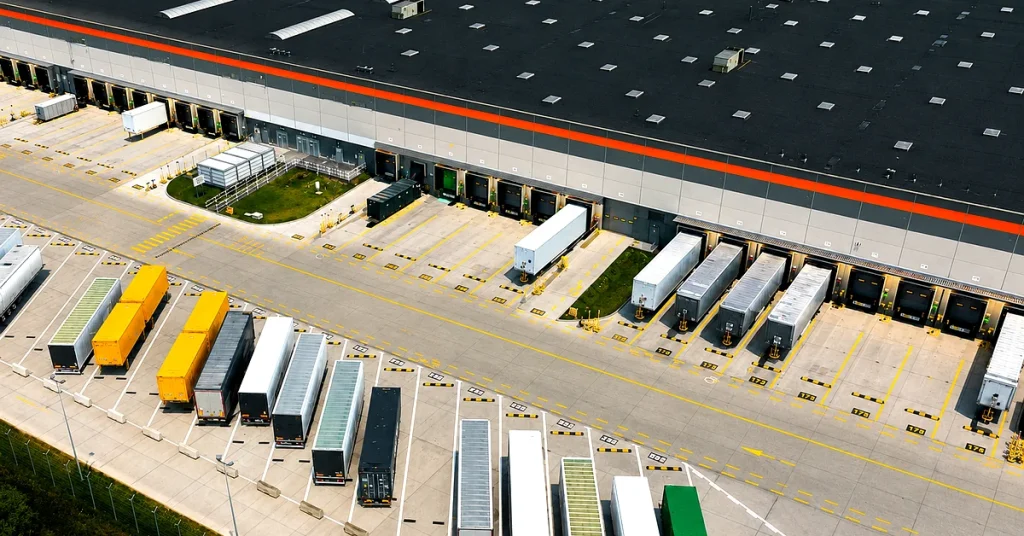
The Inland Empire isn't a secondary logistics market. It's one of the largest warehousing corridors in the country, and one of the most targeted. The same freight volumes that make it essential to the Greater Los Angeles economy also make it attractive. Organized theft operations follow freight.
Valley Alarm serves warehouse and distribution center operators throughout the Inland Empire with ValleyGuard live video monitoring, solar-powered mobile security trailers, pole-mounted camera systems, and access control. This page covers the specific security risks in the IE logistics corridor and how Valley Alarm addresses them.
For a broader look at how live monitoring works across Southern California warehousing operations, see our warehouse and distribution center security overview.
Jump to: IE corridor risks | Service capability | The incident record | Mobile trailers
Security Risks Specific to the Inland Empire Logistics Corridor
Cargo Theft Along the 10 FWY and 15 FWY Corridors
In 2025, Fontana, California logged 92 cargo theft incidents — the highest in Southern California — with thieves increasingly targeting the Inland Empire's dense concentration of distribution centers along the 10 FWY and 60 FWY corridor. (Verisk CargoNet 2025 Annual Analysis)
The most active ValleyGuard site in the Inland Empire isn't a cannabis facility or a jewelry warehouse. It's an industrial parts supplier in Rancho Cucamonga.
That facility in Rancho Cucamonga has logged 156 incidents and 26 police dispatches under ValleyGuard monitoring. That isn't a facility with bad luck. It's a facility sitting inside one of the most targeted cargo corridors in Southern California.
On November 20, 2025, at approximately 7:24 PM, a dark pickup truck entered the yard. An individual was caught mid-act, loading pallets into the truck bed. Multiple audio warnings went out through the on-site speaker. The individual ignored them.
The San Bernardino County Sheriff was dispatched.
156 incidents. 26 times, law enforcement responded. That's how active this corridor is.
The 10 FWY and 15 FWY run through some of the highest-concentration warehouse real estate in the country. As port volumes grew and the Inland Empire built out as the primary distribution hub for the western US, organized theft operations followed.
Cargo that clears the port and sits in an IE staging yard before final delivery enters a specific vulnerability window. Crews doing reconnaissance know which facilities have gaps. They've done the math on how long a dock door can stay open before anyone reacts.
Passive cameras recorded the Rancho Cucamonga pallet theft as it happened. The cameras didn't stop it. Live intervention did. You can see how ValleyGuard interventions play out on the ValleyGuard catches page.
The Cameras Weren't the Problem. The Response Was.
Outdoor lots and satellite staging areas are where cargo theft starts, not where it ends. Crews don't breach a secured building first. They start with the yard and time the gaps.
At a distribution center in Ontario, a ValleyGuard camera picked up a white SUV on property at 3:11 AM on March 12, 2026. An individual in a black shirt exited the vehicle and began loading pallets and other materials into a red pickup truck.
A stern audio warning was issued. The activity continued. Police were contacted and given a detailed description of both vehicles and the individuals involved.
That's a cargo theft in progress at 3 AM. It doesn't appear in a Monday morning incident report if the camera is only recording, not watched.
That Ontario facility has logged 108 incidents across the monitoring period. Incidents don't cluster once and stop. They keep coming back to the same facilities, which isn't random. It's reconnaissance informing repeat targeting.
On January 18, 2026, at approximately 12:22 AM, two intruders were spotted on the same Ontario property. Warnings went out immediately. The intruders didn't leave. Law enforcement was notified and dispatched in response to individuals forcing open a white semi-truck on-site.
Large Outdoor Yards Without Hardwired Infrastructure
Many Inland Empire distribution centers sit on large parcels with extensive outdoor staging areas, trailer rows, and satellite lots. The back sections of the property are often the least protected. This isn't accidental. Crews doing reconnaissance note exactly where the cameras stop.
Solar-powered pole cameras and mobile security trailers address this directly. No trench, no conduit, no electrical permit. Coverage is operational within 24 to 48 hours of a site assessment.
What Actually Happens at 3 AM
Many IE warehouses operate on daytime schedules with minimal overnight staffing. That overnight window is the highest-risk period, and crews targeting these facilities know it.
On April 4, 2026, at 10:11 PM on a Saturday, an intruder was detected on camera at a tire and parts distributor in Ontario. Multiple audio warnings were issued. Ontario PD was dispatched but couldn't locate the individual on arrival. The individual was gone.
That's a Saturday night at a named commercial distribution facility. The warning went out. The individual left. That's the intervention working as designed, even when police don't make contact.
At a commercial real estate property in Jurupa Valley, a ValleyGuard Intervention Specialist observed an individual on April 5, 2026, walking within the fence line. A stern audio warning was issued, the site contact was notified, and law enforcement was dispatched. That property has generated 17 police dispatches over the monitoring period.
When nobody's actively watching, a box truck backing up to a loading dock at 2:47 AM can empty a pallet rack before a patrol company knows anything happened.
Valley Alarm's Inland Empire Service Capability
The cities along the 10 FWY and 15 FWY corridors share a common profile: high freight volume, large-parcel industrial zoning, and limited overnight staffing relative to the square footage being protected. That's the risk profile ValleyGuard is built for.
San Bernardino County coverage includes Ontario, Fontana, Rialto, Rancho Cucamonga, Chino, San Bernardino, Colton, Upland, and Montclair. Riverside County coverage includes Moreno Valley, Perris, Riverside, Corona, Norco, Jurupa Valley, and Mira Loma. All monitoring is handled by US-based Intervention Specialists with no overseas outsourcing.
424 Incidents. 77 Police Calls. Real Evidence Every Time.
ValleyGuard monitoring covers Inland Empire facilities the same way it covers Los Angeles: AI cameras detect activity, a US-based Intervention Specialist reviews the live feed in real time, and a live audio warning goes out if a threat is confirmed.
The system is UL-listed. Law enforcement dispatch is available for any Inland Empire jurisdiction in both San Bernardino and Riverside counties. Every incident is documented with timestamped video.
How the Documentation Works
For facilities running overnight skeleton crews or weekend-only operations, that real-time presence is the difference between stopping an incident and filing a report about one.
The November 20 incident at the Rancho Cucamonga industrial parts supplier shows how the documentation builds. A dark pickup enters the yard and an individual starts loading pallets. Warnings go out. The individual ignores them.
The sheriff is called. What exists at that point is timestamped video, documented warnings, and a law enforcement dispatch on file. That's a different outcome than a missing pallet noticed on Tuesday.
When escalation happens, the evidence package is already built. When it doesn't, the incident is still documented. Either way, the facility has something to show to insurance, law enforcement, or corporate.
Moreno Valley and Riverside Coverage
At a property in Moreno Valley, Riverside Police were dispatched on multiple occasions across the monitoring period. On December 25, 2025, an intruder was spotted walking on the property. A warning was issued. The property owner was notified and advised to contact local authorities.
Riverside PD responded. On April 13, 2026, a light-colored SUV was observed leaving the property under suspicious circumstances. Warnings were issued, law enforcement was notified, and a patrol was dispatched.
Riverside coverage is active across multiple corridors. A commercial property in Riverside has logged police dispatches dating back to 2024, with Riverside PD responding consistently to ValleyGuard escalations.
Mobile Security Trailers for IE Logistics Yards
The solar-powered mobile security trailer is particularly well-suited to the Inland Empire market. Large outdoor staging yards, trailer rows, and satellite lots are common across the region. Many of these areas don't have the hardwired infrastructure needed for a conventional camera installation.
Valley Alarm's mobile trailers deploy without trenching or electrical work. The unit arrives, gets positioned, and is operational the same day. Night color cameras cover the surrounding area continuously.
The on-site speaker enables live audio warnings when ValleyGuard detects activity. The trailer repositions as coverage needs change.
For operators who need immediate coverage after a theft incident, or during seasonal volume ramps when permanent systems haven't caught up, the 24-to-48-hour deployment window matters. A week's delay in getting coverage in place is a week of unprotected exposure.
The average loss per cargo theft incident in California rose to $273,990 in 2025, a 36% increase from $202,364 in 2024, according to Verisk CargoNet's 2025 analysis.
Frequently Asked Questions
Who provides warehouse security in the Inland Empire?
Valley Alarm provides warehouse security and distribution center monitoring throughout the Inland Empire, including Riverside County and San Bernardino County. Services include ValleyGuard live video monitoring, solar-powered mobile security trailer deployment, pole-mounted camera installation, and access control for warehouse entry points. Valley Alarm has served the greater Los Angeles and IE corridors since 1981.
How fast can a security system be installed at an Inland Empire warehouse?
Solar-powered mobile security trailers are operational within 24 to 48 hours of a site assessment. That makes them the fastest option for facilities along the 10 FWY and 15 FWY corridors that need immediate coverage. Fixed pole camera installations and access control systems have timelines that depend on scope and site conditions. Contact Valley Alarm for a specific timeline based on your facility.
Do you serve Ontario, Fontana, and Rancho Cucamonga?
Yes. Valley Alarm provides commercial security services throughout San Bernardino County, including Ontario, Fontana, Rancho Cucamonga, Rialto, Chino, Upland, Colton, and San Bernardino. Active ValleyGuard monitoring clients in these cities include warehouse operators, distribution centers, and industrial properties along the 10 FWY and 15 FWY corridors.
How does remote video monitoring work for logistics yards in the Inland Empire?
ValleyGuard AI cameras are installed at the logistics yard and watched 24/7 by US-based Intervention Specialists. When a camera detects activity, the Specialist reviews the live feed immediately. If a threat is confirmed, a live audio warning goes out through the on-site speaker.
Law enforcement is dispatched if needed, and every incident is timestamped and documented. There's no overseas outsourcing, and no waiting for a callback from a remote call center.
What mobile security trailer options are available for IE distribution centers?
Valley Alarm deploys solar-powered mobile security trailers throughout the Inland Empire. Each trailer includes night color cameras, a two-way speaker for live audio warnings, and full ValleyGuard monitoring integration. It deploys without hardwired power or trenching, can be operational the same day it arrives on-site, and repositions as coverage needs change.
Is Valley Alarm a commercial security company serving Ontario and San Bernardino County?
Yes. Valley Alarm has served the greater Los Angeles and Inland Empire region since 1981. The service area covers San Bernardino County and Riverside County, including the primary logistics and warehousing corridors along the 10 FWY and 15 FWY. Clients include commercial distribution operations in Ontario, Jurupa Valley, Moreno Valley, and Riverside, and warehouse facilities throughout the corridor.
Securing Inland Empire facilities is what we do.
ValleyGuard covers distribution centers and logistics facilities throughout the Inland Empire, San Bernardino County, and Riverside County.
Related Articles
- →Warehouse Security Guide for Southern California
- →Warehouse and Distribution Center Security in Los Angeles
- →After-Hours Security for Distribution Centers
- →Industrial Security Camera Systems for Los Angeles Facilities
- →Warehouse Security Cameras vs. Security Guards
- →ValleyGuard Live Video Monitoring
- →Live Video Monitoring Catches on Camera