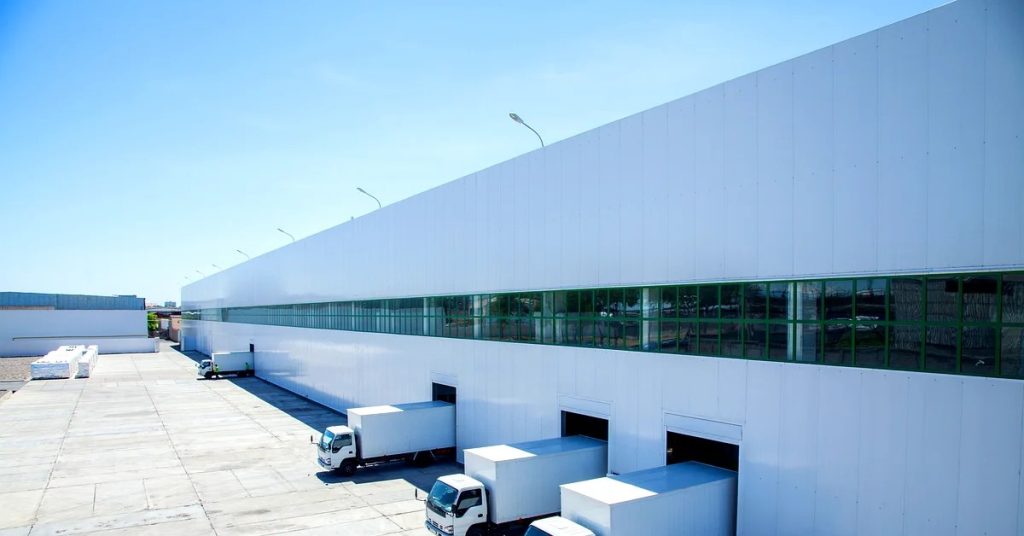
28 Cameras. Half of Them Covering the Wrong Sections.
A logistics yard in Fontana has 28 cameras. Half of them cover sections of the property that haven't had an incident in three years. The two dock approaches with the actual theft history had standard commercial cameras that go infrared black-and-white after dark. The footage showed a silhouette near a trailer. Nobody could tell what the person was wearing, what they were driving, or which direction they left.
That isn't a camera problem. It's a specification problem.
In 2025, Fontana, California logged 92 cargo theft incidents - the highest concentration in Southern California, according to Verisk CargoNet's annual analysis. ValleyGuard has documented more than 1,300 verified incidents across Southern California industrial facilities. In every case, live monitoring intervention - not recorded footage reviewed after the fact - determined whether a loss was prevented.
Valley Alarm installs and monitors industrial security camera systems for warehouses, manufacturing plants, and logistics yards throughout Los Angeles County and the Inland Empire. This guide covers what separates industrial-grade cameras from standard commercial systems and how Valley Alarm integrates them with 24/7 live video monitoring. Our warehouse security overview explains how the full ValleyGuard system works for industrial facilities.
Jump to: What makes them different | What to look for | Poles vs. trailers | Why monitoring matters | ValleyGuard integration | Service area
What Makes Industrial Security Cameras Different
A retail camera is built for a 30-foot retail floor. An industrial camera needs to cover a 300-foot trailer row, survive direct sun in a Chatsworth yard all summer, and produce footage that's actually useful for identification at distance. Not just a visual confirmation that something happened.
Valley Alarm selects hardware based on what the facility needs, configures it for specific coverage zones, and integrates it with live monitoring. The camera hardware and the response capability come from one provider.
What to Look for in Industrial Security Cameras
Black-and-White at 2 AM Gives You a Shape. Night Color Gives You a Description.
At Reseda Business Park on the night of November 14, 2025, a ValleyGuard Intervention Specialist observed an individual on Camera 9 wearing a ski mask. A verbal warning was issued, and LAPD was contacted. The individual left while the dispatcher was still on the line.
The ski mask tells you the person knew they were on camera. Night color footage still captured what they were wearing: jacket color, build, height. That's the difference between a camera that documents and a camera that identifies. Black-and-white infrared gives you a figure in a mask. Night color gives you the details that make a police report useful.
Night color cameras capture what infrared can't: the difference between a light-colored vehicle and a white BMW. That's the gap between a camera log and an investigative lead. The detail that makes a police report useful is usually the detail that only night color catches.
For most industrial facilities, overnight coverage is the whole point. Night color imaging isn't an upgrade. It's the baseline.
Standard infrared cameras produce black-and-white footage after dark - movement detection without identification detail. Night color cameras maintain full-color imaging in low-light conditions, capturing clothing, vehicle color, and build at industrial coverage distances. For facilities operating overnight shifts, the specification difference determines whether an incident produces an investigative lead or a record that something happened.
Resolution and Field of View for Large Sites
A loading dock, a trailer staging row, or a perimeter fence line may be 200 feet or more from the nearest mount point. A camera that detects motion at that distance but can't resolve a face or a plate number isn't doing the job.
License plate capture at vehicle entries requires a different focal configuration than perimeter coverage. Zone mapping matters. Valley Alarm site assessments determine what each zone actually needs before any hardware is specified.
Weatherproofing and Vandal Resistance
Southern California looks mild on paper. Industrial cameras take real punishment: direct sun for 10-plus hours in summer, occasional heavy rain, and sharp overnight temperature drops. IP66-rated housing can handle dust and water exposure. Cameras at ground level or on accessible structures need vandal-resistant construction that holds under impact.
A camera that goes offline because someone kicked it isn't a camera system.
Solar-Powered vs. Hardwired Installation
Where power exists, hardwired is the right call. Consistent power, no battery management, no solar dependency. That's the standard for dock areas, building mounts, and perimeter points close to the facility.
When hardwired power isn't available, solar solves it. And the areas without power access are exactly the areas organized theft crews target: satellite yards, overflow lots, rear fence lines, remote gate entries. Valley Alarm deploys solar-powered pole cameras that are operational within 24 to 48 hours. No trenching. No electrical permit.
One thing worth being clear about: Valley Alarm deploys solar cameras exclusively as part of the ValleyGuard live monitoring system. The hardware and the monitoring aren't sold separately. If you need standalone recording equipment without live response, that's a different product category, and not what Valley Alarm does.
Fixed Pole-Mounted Cameras vs. Mobile Security Trailers
Both run on solar power. Both include flashing blue lights that make their presence visible at a distance. The difference is permanence and scale.
Fixed Solar Pole Cameras
A fixed solar pole camera installs at a defined location and stays there. It's the right choice when the coverage need is permanent: a specific fence line section, a gate entry, a lot corner, or a loading zone that will always need coverage. Fixed units are lower profile and typically lower cost per covered location.
Solar-Powered Mobile Security Trailers
A solar-powered mobile security trailer is towable and relocatable. It deploys within 24 to 48 hours and can be moved as needs change. Mobile trailers fit active job sites, temporary deployments, or facilities where the primary coverage needs shift seasonally.
The trailer's height and physical scale make it more imposing than a pole camera: a more obvious statement of presence for sites where visible deterrence is part of the goal.
Both fixed pole cameras and mobile trailers connect to ValleyGuard live monitoring. Neither is standalone recording equipment.
Why Industrial Camera Systems Need Live Monitoring Integration
A camera that only records can only document what has happened. A camera connected to live monitoring stops it while it's happening. Those aren't similar outcomes.
For industrial facilities in Los Angeles, the gap matters. Cargo theft, equipment theft, and unauthorized perimeter access can all be completed in under three minutes. Reviewing recorded footage, the next morning confirms a loss. A live Intervention Specialist issues an audio warning during the event and has law enforcement en route before anyone leaves the property.
At a storage and logistics facility in Gardena, at 1:46 AM on September 3, 2025, a ValleyGuard Intervention Specialist detected an individual approaching the building on foot. An audio warning went out immediately. But, the individual didn't leave. At 1:56 AM, the Specialist contacted the Los Angeles County Sheriff and notified the site contact. A patrol was dispatched. No damage, no theft.
At a commercial property in North Hollywood, at 1:03 AM on October 26, 2025, an Intervention Specialist observed an unauthorized individual entering the site wearing black clothing, visible on Camera 3. A stern audio warning was issued immediately. Site contacts were notified, and the Los Angeles Police Department was contacted. A patrol was dispatched. A passive camera records someone entering. Live monitoring stopped it.
At a facility in Pacoima, at 1:26 AM on March 20, 2026, Camera 4 picked up an intruder moving through the property. An audio warning went out immediately. The intruder stayed. The Intervention Specialist escalated, notified keyholders, and contacted law enforcement.
Two vehicles, a light-colored SUV and a dark-colored sedan, were observed on-site. The detail that live cameras provide isn't just documentation after the fact. It's intelligence that responding officers walk in with.
How ValleyGuard Integrates with Industrial Camera Systems
ValleyGuard connects AI-triggered cameras to US-based Intervention Specialists who monitor live feeds in real time. When a camera detects activity, the Specialist reviews it immediately. If it's a confirmed threat, a live audio warning goes through the on-site speaker. If the individual doesn't leave, law enforcement is dispatched. Every incident is documented with timestamped video.
Dave Michel, Valley Alarm's Co-President and President of the Greater Los Angeles Alarm Security Association, has spent more than 40 years in commercial security in Los Angeles. His consistent finding at facilities that have been hit repeatedly:
"The camera spec was wrong for the environment. Either the resolution couldn't identify someone or something at distance, or the overnight imaging was black-and-white infrared when it needed to be night color. The footage existed. It just wasn't useful."
The wrong camera spec is no different than no cameras at all.
Have a specialist assess your industrial facility's camera coverage and image quality.
Service Area: Industrial Facilities Across Southern California
Valley Alarm installs and monitors industrial camera systems throughout Los Angeles County and the Inland Empire. Coverage includes Vernon, City of Industry, Commerce, Chatsworth, Sylmar, Torrance, Gardena, El Monte, and the San Fernando Valley, as well as Inland Empire facilities in Ontario, Fontana, Rancho Cucamonga, Rialto, and San Bernardino County. All monitoring is handled by US-based Intervention Specialists with no overseas outsourcing.
Frequently Asked Questions
What type of security cameras are used in industrial facilities?
Industrial facilities use high-resolution cameras with wide-angle coverage, night color imaging, weatherproof housing, and vandal-resistant construction. The right configuration depends on facility layout, coverage distances, and whether locations have existing electrical infrastructure or need solar-powered deployment. One configuration doesn't fit every site.
What's the difference between commercial and industrial security cameras?
Industrial cameras are built for larger coverage distances, harsher environmental conditions, and higher-demand operating environments than standard commercial cameras. They typically feature higher IP weather resistance ratings, wider fields of view, and imaging systems designed for consistent performance across temperature extremes and dust exposure. A camera rated for a retail store isn't rated for a Chatsworth yard in July.
Do industrial security cameras work in low light or at night?
Night color cameras produce full-color footage in low-light and no-light conditions. That's different from standard infrared cameras, which capture only black-and-white footage after dark. For industrial facilities requiring overnight coverage, night color imaging is the right specification, not an optional upgrade. The difference between a clothing description and a silhouette is the difference between a useful incident report and a record that something happened.
Can industrial security cameras connect to live monitoring?
Yes. Valley Alarm integrates industrial camera systems with ValleyGuard live video monitoring. When AI detection triggers an alert, a US-based Intervention Specialist reviews the live feed in real time and can issue an audio warning or dispatch law enforcement immediately. Recording without monitoring is passive. Monitoring makes it active.
What's the best security camera system for a manufacturing plant?
It depends on facility layout, operating hours, coverage zones, and whether electrical infrastructure exists at all required install locations. Manufacturing plants typically need interior coverage for production and inventory areas, dock and shipping coverage, and perimeter coverage for outdoor yards and access points. Valley Alarm conducts site assessments to determine the right configuration for each facility.
Are solar-powered outdoor security cameras reliable for industrial yards?
Yes. Solar-powered pole cameras designed for commercial and industrial use include battery backup systems that maintain operation through overnight hours and periods of reduced sunlight. In Southern California, year-round sunlight provides consistent charging capacity for most outdoor industrial applications. June Gloom is the main variable, and a properly sized system accounts for it.
Protect your industrial facility around the clock.
ValleyGuard deploys across industrial facilities throughout Greater Los Angeles. Talk through a coverage plan for your site.
Related Articles
- →Warehouse Security Guide for Southern California
- →Warehouse and Distribution Center Security in Los Angeles
- →Warehouse Security Cameras vs. Security Guards
- →Manufacturing Facility Security in Los Angeles
- →Solar-Powered Security Cameras for Logistics Yards
- →Live Video Monitoring Catches on Camera
- →Warehouse Access Control: Securing Loading Docks and Entry Points