
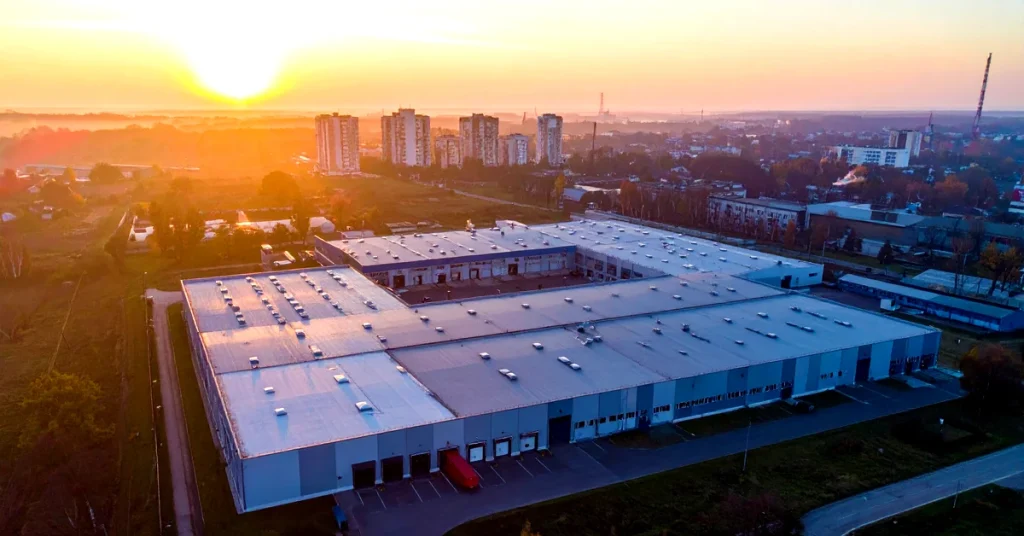
Your Warehouse Is Most Vulnerable After 6 PM. Here's What ValleyGuard Does About It.
It's 6:47 PM on a Friday. The last forklift operator has clocked out. The dock supervisor did a final walk-through, confirmed the loading area was clear, and left ten minutes ago. By 7:00 PM the parking lot is empty.
Except one car. A dark sedan parked on the street, facing the entrance. It's been there since 6:30.
That gap between the last employee leaving and the moment every access point is secured is the highest-risk window in a distribution center's entire week. Anyone watching from outside knows exactly when this period starts and ends.
Distribution centers are most vulnerable to unauthorized access during the first two hours after closing and the hour before the morning shift begins, periods when the facility appears unoccupied, but access doors and dock areas are not yet secured for the night.
Valley Alarm's ValleyGuard monitoring data across distribution centers and industrial facilities in the Los Angeles region tells a specific story about when incidents happen. Across more than 430 logged incidents, 216 occurred during the after-hours window between 6 PM and 6 AM.
Of those overnight incidents, 90% were resolved when the Intervention Specialist issued an audio warning. The intruder left without police involvement. Every incident described in this post is drawn from Valley Alarm's ValleyGuard operational records.
In the incidents that weren't resolved at the warning stage, law enforcement was dispatched with a real-time description of what they were walking into. For a full picture of how ValleyGuard covers every part of a distribution center, see Warehouse and Distribution Center Security in Los Angeles.
Jump to: The three windows | What 3 AM looks like | Overnight coverage | What needs coverage
The Three Windows That Matter
Not every hour overnight carries the same risk. The threat pattern ValleyGuard operators see across LA and Inland Empire facilities breaks down into three distinct windows, each with its own exposure profile and incident type.
6 PM to 8 PM: The Post-Close Window
This is the highest risk window of the overnight period. When last shift ends, employees leave, and the facility looks unoccupied dock doors may still be in the process of being secured and access points may not yet be fully locked.
A crew that knows the shift schedule can be on your property within minutes of the last car leaving.
ValleyGuard's incident records show exactly this. At an industrial parts supplier in Rancho Cucamonga, an individual was loading pallets into a pickup truck right at close. The facility hadn't fully locked down yet. Our ValleyGuard Intervention Specialist issued audio warnings. The individual ignored them. So, a Bernardino County Sheriff unit was dispatched with a description of the subject and the vehicle.
ValleyGuard logs show the same playbook the following week, at a San Fernando Valley distribution center. Right after it closed, a grey sedan pulled up. Two individuals stepped out carrying tools and approached the front entrance. ValleyGuard had them on camera the moment they stepped onto the property. One audio warning was issued and they left.
The risk also concentrates on specific days. In ValleyGuard's distribution center incident data, Friday through Sunday accounts for more than half of all logged incidents. A crew targeting the weekend knows the next staffed shift could be 48 hours away.
8 PM to 4 AM: The Overnight Window
This window is quieter for opportunists but more serious when organized operations are involved. This is the window for trailer break-ins in staging yards, coordinated cargo theft from unsecured dock areas, and catalytic converter theft from vehicle lots adjacent to your facility.
Organized operations that target this window have typically been watching your facility. They know which areas have camera coverage and which that don't. They know whether the cameras are monitored live or record-only. An organized crew does a dry run first to confirm there's no live response. Then they come back.
One documented incident from ValleyGuard's overnight records: at 12:22 AM, two individuals were observed at a distribution center in Ontario forcing open a parked semi in the staging yard. The Intervention Specialist issued multiple audio warnings. They didn't leave. As a result, police were dispatched with real-time descriptions of both individuals and the vehicles on site.
According to CargoNet's 2025 supply chain risk analysis, cargo theft in California surged 60% in 2025, with the Inland Empire among the most targeted regions in the country. In our data, Fontana alone recorded 92 theft incidents that year. Ontario recorded 75. These aren't random events.
4 AM to 6 AM: The Pre-Shift Window
The pre-shift window is the second highest-risk period of the overnight cycle. Early arrivals show up before the official shift starts. Dock activity may begin before full staffing is in place. For a crew that knows the schedule, this window has the same vulnerability as the post-close window: people are on the property, but oversight hasn't caught up yet.
The difference is that legitimate early activity provides cover. A vehicle pulling up at 4:30 AM looks like an early employee, vendor, or contractor. There's no obvious trigger that distinguishes a legitimate early arrival from an intruder. That ambiguity is exactly what a crew targeting this window counts on.
ValleyGuard's pre-shift records document this directly. Suspicious subjects were on-site at a South Bay distribution facility at 4:09 AM, just before the morning shift. The Intervention Specialist observed them on camera, issued an audio warning within seconds, and contacted law enforcement. Police were dispatched. The crew knew the schedule but were deterred before they reached the building.
What the Difference Looks Like at 3 AM
The gap between a record-only system and live monitoring isn't visible during the day. It shows up at 3 AM, when no one is watching the footage, and no one can act on it.
A ValleyGuard-monitored materials yard in Van Nuys shows the difference in real terms. A masked individual approached the perimeter after hours. The Intervention Specialist saw him on camera, issued a warning through the on-site speaker, and he left before reaching the building.
Without live monitoring, that same camera records the same incident. The footage sits there until someone reviews it Monday morning, after whatever was going to happen has already happened.
Dave Michel, Valley Alarm's Co-President and President of the Greater Los Angeles Alarm Security Association, puts it plainly:
"The facilities that get hit aren't the ones that look obviously unprotected. They're the ones that look monitored but aren't. Record-only systems give the appearance of coverage without the ability to respond."
Record-only surveillance, live video monitoring enables real-time intervention at distribution centers, a critical difference when cargo or equipment theft can be completed in under three minutes.
ValleyGuard doesn't operate on a patrol schedule. There are no check-in intervals and no gap between rounds where the facility is unobserved. When a camera detects activity, the alert goes to an Intervention Specialist who's already watching the live feed.
How ValleyGuard Covers the Overnight Window
ValleyGuard remote video monitoring can cover distribution centers 24 hours a day, with AI-powered cameras detecting motion and triggering immediate review by a US-based Intervention Specialist who can issue live audio warnings or contact law enforcement within seconds of detection.
The AI detection layer picks up motion. It assesses the activity against the parameters set for that camera area and generates an alert if it matches a threat pattern. In the incidents logged across ValleyGuard's monitored facilities, the gap between detection and the first audio warning consistently runs under 60 seconds. A record-only system logs the same moment and plays it back the next morning, if someone knows to check.
Night color cameras make that detection usable in low-light environments. At 2 AM, the Intervention Specialist isn't working from grainy black-and-white footage. The live feed is clear enough to identify individuals, see vehicle descriptions, and confirm whether the activity is a real threat before issuing a warning or contacting law enforcement.
The alert reaches a US-based Intervention Specialist immediately. A trained person is watching the live feed and determining whether the activity is a confirmed threat or a false positive. Most of the time, this determination takes seconds.
If it's a confirmed threat, the Specialist issues a live audio warning through the on-site speaker system. They tell the individual they're on camera, identify them by what's visible (e.g. clothing, vehicle, gender), and warn that law enforcement has been notified. Most people hear a live voice and leave.
If they don't leave, the Specialist contacts local law enforcement and provides a verbal description for dispatch. Every step is documented in a timestamped incident report.
For a direct comparison of this response model against on-site guards, see Warehouse Security Cameras vs. Security Guards.
The Parts of Your Facility That Need Coverage After Hours
Dock Doors and Loading Areas
The overnight loading dock is the highest-value target after hours. Freight is concentrated in a small space, and dock-level activity is expected during the workday, which means an intruder accessing the dock area in the evening can blend into the expected pattern of a facility that hasn't fully shut down.
Dock-level camera coverage combined with access control at dock doors creates layered protection. Credentials control who can open the door. Camera coverage documents what happens at the dock whether it's accessed legitimately or not. If a dock door opens at 2 AM with valid credentials, the camera tells you who used them and what left the building.
Trailer Yards and Staging Areas
Trailer yards sit outside the main building footprint, away from primary lighting, and access is rarely controlled at the individual trailer level. A crew that knows which trailers are loaded can reach the freight inside quickly.
Semi-trucks parked overnight in staging rows are a documented target in ValleyGuard incident data. In the Ontario incident described above, the Specialist provided law enforcement with real-time vehicle descriptions as they arrived on scene.
Solar-powered pole cameras and mobile security trailers cover staging areas without requiring hardwired infrastructure. Night color cameras provide full-color imaging throughout the overnight hours, giving the Intervention Specialist a clear view of every trailer row before anyone reaches a door. See all documented ValleyGuard interventions at the ValleyGuard Live Video Monitoring Catches page.
Perimeter and Fence Lines
Perimeter camera coverage gives the Intervention Specialist visibility of anyone approaching before they reach a building entry. That distance matters.
A subject who hears a live voice before they've reached a door still has a clean exit. They haven't committed to anything. A subject who's already at the dock or inside the loading area is harder to deter and more likely to escalate.
Early detection at the perimeter is what creates the conditions where the audio warning works. The further out the camera picks up the approach, the more time the Specialist has to issue a warning, assess compliance, and contact law enforcement before the situation reaches the building.
Frequently Asked Questions
What types of theft occur most often at distribution centers after hours?
Cargo theft takes several forms depending on the time window. During the post-close period, pallet theft from loading areas is most common, often by individuals or small teams who've been watching the shift schedule.
Trailer break-ins in staging yards are the dominant pattern during the midnight window. Catalytic converter theft from vehicle lots adjacent to the facility is also a documented overnight risk across ValleyGuard's monitored sites.
In ValleyGuard's incident data, each of these types appears across multiple sites and time windows, which is why camera coverage is configured to the specific risk profile of each zone rather than applied uniformly.
What are the highest-risk hours for distribution center theft?
The two highest-risk windows are the first two hours after the facility closes, typically 6 PM to 8 PM, and the 2 hours before the morning shift begins, typically 4 AM to 6 AM. During both windows, the facility appears unoccupied, access points may not be fully secured, and legitimate early activity can provide cover for someone who doesn't belong on the property.
How does ValleyGuard handle a break-in in progress?
When a camera detects unauthorized activity, the alert goes immediately to a US-based Intervention Specialist. If the activity is confirmed as a threat, they issue a live audio warning through the on-site speaker. If the individual doesn't leave, law enforcement is dispatched with a verbal description of the individuals and vehicles on site. Most incidents are resolved at the audio warning step.
Every step is documented with a timestamped report, which is available to facility management and can be provided to law enforcement or insurance carriers after an incident.
Can remote video monitoring replace overnight security guards?
For perimeter surveillance, loading dock coverage, and outdoor staging areas, remote video monitoring provides more complete coverage than a single on-site guard at lower cost. A guard can only be in one place at a time. An Intervention Specialist is watching every camera zone simultaneously and can act on any of them within seconds.
For facilities with compliance requirements for on-site personnel, both approaches can work together. ValleyGuard covers the overnight window while a guard handles access control at the entry point.
What happens when a ValleyGuard camera picks up a false positive?
Before a site goes live, the AI cameras go through a training period of approximately one week. During that window, the system learns the site: normal traffic patterns, lighting shifts, areas that see regular activity. That training is what eliminates environmental false positives before they ever reach a Specialist.
Once the site is live, interventions are go/no-go. ValleyGuard doesn't make determinations about whether a specific person belongs on a client's property. The client sets the schedule: if no one is authorized on-site during a given time window, anyone detected gets a talkdown. If they don't comply, law enforcement is dispatched. The decision tree is defined by the client before monitoring begins, not by the Specialist in the moment.
How long does it take to get distribution center security cameras installed?
Solar-powered mobile security trailers are operational within 24 to 48 hours of a site assessment. No power infrastructure or construction required. Fixed pole camera installations vary by facility size and site conditions. Contact Valley Alarm for a timeline based on your distribution center's layout and coverage requirements.
Your distribution center is most exposed after hours.
ValleyGuard covers the full overnight window across Greater Los Angeles, the Inland Empire, and the San Fernando Valley.
Related Articles
- →Warehouse Security Guide for Southern California
- →Warehouse and Distribution Center Security in Los Angeles
- →ValleyGuard Live Video Monitoring Catches On Camera
- →Remote Guard Video Monitoring for Facility Management
- →Warehouse Security Cameras vs. Security Guards
- →Cargo Theft Prevention for Warehouses and Logistics Companies
- →Mobile Security Trailers: Inland Empire
- →ValleyGuard Remote Video Monitoring

- Remote Video Monitoring: The Complete Guide for Commercial Properties - August 13, 2026
- How Much Does Remote Video Monitoring Cost? - August 13, 2026
- Remote Video Monitoring for Apartment Complexes and Multi-Family Properties - August 13, 2026