
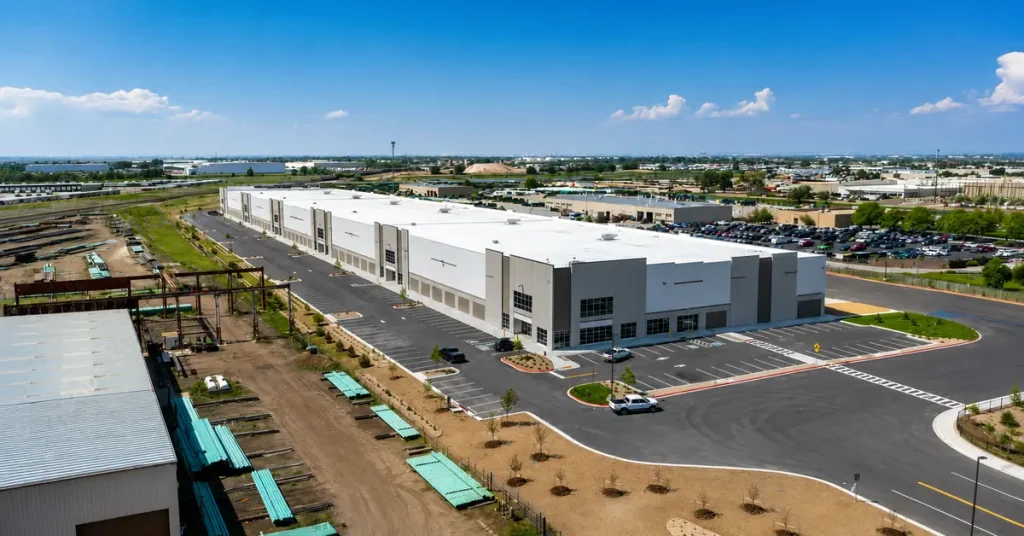
Warehouse Security Guide for Southern California: Cargo Theft, Employee Theft, and What Actually Stops Each.
Cargo theft. After-hours break-ins. Employee pilferage. Fictitious pickups. Most warehouse operators in Los Angeles and the Inland Empire are dealing with at least two of these at any given time, and most security setups weren't built to stop any of them.
The Inland Empire's concentration of distribution centers along the 10 and 60 freeways makes Southern California one of the most targeted freight corridors in the country.
But the threat profile isn't just external. Internal theft accounts for a larger share of total losses than most operators expect, and it runs longer before anyone catches it.
This warehouse security guide covers the full security picture for warehouses and distribution centers in Greater Los Angeles and the Inland Empire: what you're up against, when it happens, what each threat requires, and how the layers of a prevention-focused setup actually work.
For Valley Alarm's warehouse and distribution center security services, see the warehouse and distribution center security service page.
Cargo theft in California surged 60 percent in 2025 to an estimated $725 million in losses, with the state accounting for 58 percent of all U.S. incidents. The Inland Empire cities of Fontana, Ontario, and Rancho Cucamonga recorded the highest concentration of incidents in the country, driven by a dense cluster of distribution centers along the 10 and 60 freeways. The average loss per incident reached $273,990 in 2025, up 36 percent over the prior year. (Verisk CargoNet 2025 Annual Analysis)
Jump to: Two threat categories | High-risk windows | Security layers | Temporary coverage | Location and risk | Manufacturing sites
The Two Threat Categories Every Warehouse Operator Needs to Understand
Warehouse security failures fall into two categories that require different responses. External theft is what most operators think about first. Internal theft is what most operators underestimate.
A prevention-focused setup addresses both, because a facility that stops break-ins but ignores employee theft is still bleeding.
External Cargo Theft: Organized, Targeted, and Repeat
Organized cargo theft in Southern California isn't random. Theft operations scout facilities, identify soft targets, and return to the same locations. Fontana logged 92 cargo theft incidents in 2025. Ontario logged 75.
San Bernardino logged 49. These aren't cities with a crime problem. They're cities with a high concentration of distribution centers along the country's most active freight corridors.
Three types of theft account for the majority of incidents. Straight theft is what most people picture: someone takes freight without authorization.
Fictitious pickup is more sophisticated: a fraudulent carrier presents false paperwork at a loading dock, and cargo leaves before anyone identifies the documents as forged.
By the time the legitimate carrier calls to ask about the load, the truck is gone. Pilferage is the small-scale removal from shipments, often by someone with internal access, that accumulates slowly over weeks or months.
The most targeted cargo in the Inland Empire isn't electronics or pharmaceuticals. It's industrial parts. Fasteners.
Products that load fast and are difficult to trace. ValleyGuard's incident records cover more than 1,300 warehouse and logistics incidents across Southern California since 2021. The pattern is consistent: once a facility is identified as accessible, it gets hit again.
For a detailed breakdown of cargo theft trends, Inland Empire hotspot data, and what prevention-focused camera and monitoring coverage looks like at the dock level, see the cargo theft prevention guide for Southern California warehouses.
Internal Employee Theft: Slower, Harder to Catch, and Often Running Longer Than You Think
Warehouse employees account for roughly 60 percent of all inventory theft in U.S. distribution centers.
The average detection window is 7 months, meaning losses accumulate for more than half a year before most operators discover what's happening, and cumulative losses by the time of discovery are typically 10 to 20 times the per-incident figure. (Source: Embroker, ASIS International)
Internal theft doesn't look like theft most of the time. Product diversion logs goods as damaged or spoiled when they're actually being removed.
Shipping fraud understates quantities or swaps freight labels before loads are recorded as received. Loading dock collusion routes external thieves to specific loads by someone who knows exactly what's staging and when. None of these look like a break-in. That's why they run so long.
Stopping internal theft requires two things cameras alone can't provide: an authorization record and an audit trail. Camera coverage shows what happened and who was present.
Access control logs show whether that person was credentialed for that zone at that time. Together, they close the gap that makes a case actionable.
For the full breakdown of detection methods, access control's role, and what makes a case prosecutable, see how to detect and prevent employee theft in warehouses.
Which credentials belong on which doors, and how a panel logs a door that opens without one, is covered in warehouse access control for loading docks and entry points.
When Theft Happens: The High-Risk Windows
Timing matters as much as method. Knowing when your facility is most exposed tells you where to concentrate monitoring resources.
External cargo theft peaks during two windows: the first two hours after a facility closes and the hour before the morning shift begins.
During those periods, the building appears unoccupied, but perimeter access may not yet be fully secured.
An organized team that knows your schedule can be in, loaded, and gone in under 20 minutes. A record-only camera system documents that sequence. It doesn't interrupt it.
Weekends and holidays extend that exposure window from a few hours to 48-72 hours. Facilities that run reduced crews on Friday afternoon and don't reopen until Monday morning are especially vulnerable.
Organized theft operations track facility schedules the same way operations managers do.
At 2:48 AM on March 22, 2026, Camera 2 detected an intruder at a commercial property in South Los Angeles. A ValleyGuard Intervention Specialist issued multiple audio warnings.
The intruder stayed. Law enforcement was contacted, and a patrol was dispatched. When officers arrived, they found a broken gate chain and a broken glass door.
The damage happened before police arrived, but the intervention prevented the theft from being completed. The difference between documentation and deterrence is whether someone is watching and able to act in real time.
Internal theft peaks at shift change. Oversight drops, personnel rotate, and small-scale removals across multiple shifts can add up significantly before anyone notices the pattern.
For a comprehensive look at after-hours risk windows, monitoring protocols, and how coverage holds up during holidays and periods of reduced staffing, see the after-hours security for distribution centers.
The Security Layers That Work for Warehouses
Warehouse security isn't a single product. It's a set of layers that cover different threat types and different access points.
The layers that matter most for warehouses and distribution centers in Southern California are live video monitoring, camera infrastructure, access control, and (when permanent systems aren't yet in place) mobile temporary coverage.
Live Video Monitoring vs. Recorded-Only Cameras
This is the most consequential decision in a warehouse security setup, and it's frequently misunderstood.
A recorded-only camera system documents what happened. Footage is available after a loss for use in insurance claims and by law enforcement. That has value. What it doesn't do is stop the theft in progress.
A live monitoring system with trained Intervention Specialists watching AI camera feeds does something different. When a camera detects unauthorized activity at a loading dock, a staging area, or the perimeter fence line, a Specialist reviews the live feed immediately.
If the activity is confirmed to be a threat, an audio warning is broadcast through on-site speakers. In the majority of incidents, the individual leaves without a dispatch being needed.
In cases where they don't comply, law enforcement is contacted with a verified, timestamped incident already documented.
At a storage and logistics property in Gardena, at 1:46 AM on September 3, 2025, a Specialist detected an intruder approaching the building on foot. An audio warning went out immediately.
The individual remained on site. At 1:56 AM, the Specialist contacted the LA County Sheriff's Department and notified the site contact. A sheriff patrol was dispatched. No theft. No damage. The response time from detection to dispatch was 10 minutes, and the documentation was complete before an officer arrived.
The critical difference isn't technology. It's whether a trained person is watching and capable of acting. You can see how live monitoring responds to real incidents on the ValleyGuard live monitoring catches page.
ValleyGuard live video monitoring for warehouse and distribution center facilities covers loading docks, trailer staging areas, and perimeter fence lines throughout Greater Los Angeles and the Inland Empire, with U.S.-based Intervention Specialists monitoring AI camera feeds 24 hours a day.
Camera Infrastructure: Coverage Points That Matter Most
Camera placement for warehouses follows a different logic than retail or office environments. The highest-risk access points in a warehouse are the loading docks, trailer staging areas, perimeter fence lines, and entry/exit gates.
These are the points where cargo moves, which means they're where both external theft and loading-dock collusion occur.
Interior coverage of high-value storage zones, restricted cargo areas, and receiving floors serves a different function: it creates the visual record needed for internal theft investigations.
A camera covering a loading dock entrance, combined with access control at that door, is a far stronger loss-prevention system than cameras alone.
Night color cameras maintain image quality in low-light conditions, which matters for a facility where the highest-risk hours are between midnight and 6 AM.
AI-assisted motion detection reduces false-alarm rates and allows Intervention Specialists to focus on verified activity rather than filtering out noise.
For industrial camera system specifications, coverage requirements, and what a camera infrastructure design looks like for a large distribution center, see industrial security camera systems for Los Angeles facilities.
Security Guards vs. Remote Video Monitoring
This comparison comes up in almost every warehouse security conversation, and it deserves a direct answer.
An on-site guard in Southern California costs $20 to $50 per hour. For 24/7 coverage, that's $15,000 to $36,000 per month before overtime, workers' comp, benefits, and turnover costs.
Guards are also subject to fatigue. The majority of warehouse incidents occur between 2 and 6 AM, when a guard who has been on shift for hours is at their least effective.
A guard stationed in a guardhouse at the property entrance is not simultaneously watching the loading docks, the trailer yard, and the perimeter fence line.
Remote video monitoring costs a fraction of that, maintains consistent attention across all monitored areas simultaneously, and doesn't have shift coverage gaps.
The response time difference is significant: an Intervention Specialist can detect activity, assess it, and initiate an audio warning in under 30 seconds. A guard responding to an alarm from across a facility takes minutes, enough time for a prepared team to complete a theft and leave.
Guards have legitimate uses for access verification, visitor management, and physical presence during business hours. They're not a cost-effective replacement for 24/7 perimeter monitoring.
For a full cost-and-effectiveness comparison specific to warehouse environments, see "warehouse security cameras vs. security guards."
Access Control at Loading Docks and Cargo Areas
Access control serves two functions in a warehouse security setup. The first is restriction: time-limited credential access means dock doors can't be opened during off-hours regardless of who holds a badge.
The second is documentation: every access event creates a timestamped log of who opened which door, at what time, and with which credential.
That log is what makes internal theft investigations actionable. Camera footage shows activity. The access log shows authorization. Together, they answer the question that footage alone can't answer: was this person supposed to be here?
Valley Alarm's camera and access control systems are separate platforms. They don't share a dashboard or automatically link badge events to camera timestamps.
What they do is generate two independent records that, reviewed together, produce a timeline cameras or access logs alone can't produce.
Temporary and Mobile Coverage: When You Need It Now
Permanent camera and monitoring systems take time to install. There are situations where coverage is needed immediately: after a theft incident, during a seasonal volume ramp, while a new facility comes online, or during a construction phase before the permanent system is ready.
Solar-powered mobile security trailers deploy in 24 to 48 hours with no infrastructure requirement. They don't need power connections, conduit runs, or network configuration.
They arrive on-site and are operational the same day. For logistics yards with outdoor staging areas, trailer parking, or gate access that's difficult to cover with fixed cameras, mobile units fill coverage gaps that permanent systems can't reach.
For a complete breakdown of mobile trailer deployment scenarios, how they integrate with live monitoring, and what temporary coverage looks like for a seasonal ramp-up or post-incident emergency, see solar-powered security cameras for logistics yards.
The Inland Empire and Los Angeles: Why Your Location Shapes Your Risk
Southern California's geography concentrates risk in specific corridors. The ports of Los Angeles and Long Beach generate the highest container freight volume in North America.
That freight moves inland by truck, primarily along the 10 freeway toward the Inland Empire's distribution center cluster. The 15 freeway corridor and the 60 freeway through Ontario and Pomona handle overflow and regional distribution.
The result is that Fontana, Ontario, Rancho Cucamonga, and San Bernardino are not just distribution hubs. They're the most consistently targeted cargo theft zones in the country. Organized theft operations work this geography deliberately.
They know which facilities have passive cameras, which have live monitoring, and which have slow police response times for their location. Facility operators in these cities need a security posture that matches the sophistication of the threats they face.
Risk profiles also differ across the broader service area. Properties in Commerce, Vernon, and the City of Industry face different threat types than facilities in Gardena or Carson. Coastal properties near the port corridors are more exposed to container freight theft.
Inland properties near major interchanges experience higher levels of organized theft activity. Understanding which threat pattern applies to your specific location shapes which security layers to prioritize.
For Inland Empire-specific data, city-level incident patterns, and coverage considerations for facilities in Ontario, Fontana, Rancho Cucamonga, and surrounding cities, see Inland Empire warehouse security.
Manufacturing and Industrial Facilities
Manufacturing facilities have a different security profile than distribution centers. The asset mix is different: raw materials, work-in-progress inventory, finished goods, and high-value equipment all coexist on one floor plan.
The access patterns are different: production workers, maintenance crews, delivery drivers, and contractors may all need access to different zones on different schedules.
And the loss patterns differ: equipment theft, materials diversion, and after-hours break-ins involving specialized tools or machinery are common in manufacturing environments, where they'd be unusual in a pure warehousing operation.
Zone-specific credentialing matters more in manufacturing than in most warehouse environments. A production worker doesn't need access to the raw materials stockroom. A contractor doesn't need access after their work window ends.
Time-restricted access, combined with camera coverage at restricted-zone entry points, creates the audit trail that manufacturing operators need to investigate both external break-ins and internal diversion.
For camera system design, monitoring coverage, and access control considerations specific to manufacturing and industrial sites, see manufacturing facility security in Los Angeles.
Frequently Asked Questions
What are the biggest security risks for warehouses in Los Angeles?
The two primary risk categories are organized external cargo theft and internal employee theft. In Southern California, external theft is concentrated along the 10 and 15 freeway corridors, with the Inland Empire recording the highest incident density in the country.
Employee-involved theft accounts for roughly 60 percent of total inventory losses nationally, with a 7-month average detection window, allowing losses to accumulate before discovery.
After-hours break-ins and loading dock collusion are the most common combined-threat scenarios.
What's the difference between a recorded camera system and live monitoring?
A recorded system documents incidents after the fact. Footage is available for investigation and insurance claims, but nothing happens during the event itself.
Live monitoring means a trained Intervention Specialist is watching AI camera feeds in real time and can issue audio warnings, contact law enforcement, and document the incident as it's happening.
For warehouses where the highest-risk hours are between midnight and 6 AM, the difference between documentation and intervention is the difference between a theft report and a prevented theft.
Do I need both cameras and access control for a warehouse?
Yes, for any facility concerned with internal theft. Cameras show what happened and who was present. Access control shows whether that person was authorized to be there and when they entered.
Neither system alone closes the investigation gap that makes a case actionable for HR, legal, and insurance purposes. For external theft prevention, cameras with live monitoring are the more critical layer. For internal theft, both systems together are necessary.
How quickly can security coverage be deployed?
A permanent camera and monitoring system requires site assessment, design, installation, and configuration, typically taking two to four weeks from start to operational status.
Solar-powered mobile security trailers deploy in 24 to 48 hours with no infrastructure requirement, making them the right tool for post-incident emergency coverage, seasonal ramp-ups, or new facility openings where a permanent system isn't yet ready.
Does Valley Alarm provide warehouse security in the Inland Empire?
Yes. Valley Alarm provides ValleyGuard live video monitoring, access control, industrial camera systems, and solar-powered mobile security trailer deployment for warehouses and distribution centers throughout the Inland Empire, including Ontario, Fontana, Rancho Cucamonga, Moreno Valley, Riverside, and surrounding cities, as well as across Greater Los Angeles, the San Fernando Valley, Long Beach, and Ventura County.
What does warehouse security cost?
Valley Alarm doesn't publish pricing publicly because the right setup depends on facility size, coverage area, number of access points, and monitoring requirements. A 50,000-square-foot distribution center in Ontario has different needs than a 200,000-square-foot multi-dock facility in Commerce.
The starting point is a site assessment that maps actual coverage gaps to specific solutions. Request a consultation to discuss coverage options and receive an accurate quote for your facility.
The right warehouse security setup starts with knowing what you're actually up against.
ValleyGuard covers warehouses and distribution centers throughout Greater Los Angeles and the Inland Empire. Talk through a coverage plan for your facility.
Related Articles
- →Cargo Theft Prevention for Warehouses in Southern California
- →Warehouse Employee Theft Prevention: Detection, Access Control and Documentation
- →After-Hours Security for Distribution Centers
- →Warehouse Security Cameras vs. Security Guards
- →Industrial Security Camera Systems for Los Angeles Facilities
- →Inland Empire Warehouse Security
- →Manufacturing Facility Security in Los Angeles
- →Solar-Powered Security Cameras for Logistics Yards
- →Warehouse Access Control: Securing Loading Docks and Entry Points
- →Live Video Monitoring Catches on Camera

- Remote Video Monitoring: The Complete Guide for Commercial Properties - August 13, 2026
- How Much Does Remote Video Monitoring Cost? - August 13, 2026
- Remote Video Monitoring for Apartment Complexes and Multi-Family Properties - August 13, 2026