
Off-Grid Sites, DCC Rules, and the Security Stack That Actually Works Without a Power Line
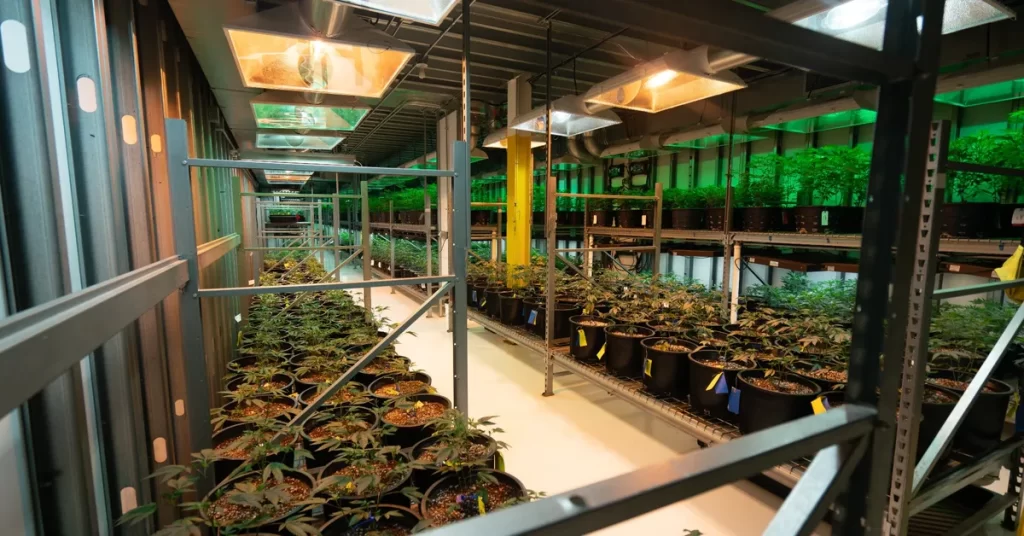
Your grow operation is 45 minutes from the nearest town. No grid power. Spotty cell service. The fencing meets DCC requirements on paper, but anyone with bolt cutters and 20 minutes of darkness can get through it. You know you need cameras. You know DCC requires surveillance. But every security company that's called you back has designed a system for a building with a parking lot and a fiber line. Not a 5-acre greenhouse in the Antelope Valley with nothing but dirt roads and coyotes.
Remote cannabis grow security is fundamentally different from dispensary security. The threats are different, the infrastructure constraints are different, and a system designed for a strip-mall storefront will fail on an off-grid cultivation site within weeks. Solar-powered surveillance, cellular uplink, AI-filtered motion detection, and live monitoring aren't upgrades on top of a standard security package. They're the baseline requirements for a site without grid power or internet.
Standard systems assume two things that most remote grows don't have: a wall outlet and an Ethernet port. Take those away, and the standard playbook falls apart.
Jump to: Why standard systems fail | The theft you're missing | What works on a grow | DCC compliance off-grid
Why Standard Security Systems Fail on Remote Grow Sites
No grid power means no traditional cameras. Hardwired PoE systems need constant electricity. A generator can fill the gap, but generators fail, run dry, and create noise that masks perimeter activity. Solar is the only reliable long-term power source for a site with no utility hookup. And battery sizing matters more than panel wattage: most break-ins happen at night.
No internet means no cloud storage and no remote viewing. Standard NVR systems save footage on-site. Someone has to drive out to check recordings. If the site is an hour away, that kills the point. Cellular uplink, 4G LTE or 5G where coverage allows, replaces wired internet for both live viewing and cloud backup.
Response time is the third gap. In urban LA, LAPD might arrive at a verified alarm within 15 minutes. In rural Ventura County or the Antelope Valley, sheriff response can run 30 to 60 minutes. Perimeter detection has to catch someone at the fence line, not inside the greenhouse. The deterrent needs to work before anyone arrives on scene.
Wildlife makes that harder. Coyotes, deer, raccoons, feral cats: standard motion detection triggers on all of them. A system that fires alerts every time an animal crosses the property line becomes a system that gets ignored. Within weeks, the operator stops checking. That's exactly when actual theft goes unnoticed. Cultivation is one of several environments that a California licensee must secure. For how grow-site security compares with dispensary and processing requirements, see the cannabis security guide for California operators.
The Theft You're Not Seeing
External break-ins aren't the only risk on remote sites. Limited on-site oversight makes these properties easy targets for employee diversion. Product walks off with someone who has a key and knows when the owner won't be around. Industry estimates consistently put internal theft at roughly 10% of yield. On a site where the owner visits twice a week, a harvest worker can skim without anyone catching on, unless cameras run continuously and someone is actually reviewing the footage.
Here, security concerns overlap with the theft problem that plagues dispensaries. The camera setup is the same. Access logs are the same. The key gap is that a remote grow can't count on a manager walking the floor. Watching has to happen off-site by default.
Perimeter cameras catch outsiders. But on a property with limited supervision, the bigger risk is product being taken by someone with authorized access. That pattern is more common than most cultivators want to admit. For the full picture of how employee theft works and what monitoring catches, see the cannabis dispensary employee theft prevention guide(opens in new tab).
What Effective Remote Cannabis Grow Security Actually Looks Like
Four components, each solving one of the problems above.
Solar-powered pole cameras are self-contained: panels, batteries for night and cloudy days, and cellular uplink all in one unit: no trenching, no conduit, no power line needed. A pole goes up in a single day and moves if the grow shifts or expands.
Mobile security trailers work for larger sites or short-term needs: seasonal grows, harvest windows, or sites waiting on permanent gear. A trailer gives you high-angle camera access, solar power, cellular signal, and onboard storage in one unit. Move it when your needs change. No new cable. No new concrete.
AI-filtered perimeter detection is what keeps the system usable. The software distinguishes humans from animals, trucks from wind gusts, and real threats from background noise. Alerts fire only when the system detects human movement in a restricted zone. That's the gap between a system people trust and one they mute.
Live monitoring with audio talkdown works the same as dispensary monitoring, adapted for outdoor use. A live operator checks the alert, activates speakers at the fence line, and calls law enforcement with GPS coordinates and real-time video. On a site where response runs 30-plus minutes, the speaker is the first line of defense. It works before a patrol car ever leaves the station.
A Sylmar cultivation site in our monitoring network had several subjects approach in the early morning hours on an April Tuesday. The Intervention Specialist issued audio warnings, and all of them left without entry being made—no police contact. No product disturbed. The response happened from a remote operator station, not from someone standing at the gate.
At another Sylmar grow site in our network, a single intruder was observed entering the property at 5:02 AM on a Thursday in March. The Intervention Specialist issued audio warnings and alerted the responsible party. No police intervention was requested. The site was secured, and monitoring continued.
All four elements have to work together: solar for power, cellular for connectivity, AI for accuracy, live operators for response.
DCC Compliance Doesn't Care How Remote Your Grow Is
DCC applies the same security standards to cultivation operations as to dispensaries. There's no rural exemption. There's no "best effort" clause for sites without power.
If you hold a grow license, you need 24/7 camera recording at the same specs: 1280x720 minimum resolution, 15 FPS, NIST-synced timestamps, and 90-day storage. Running on solar and cellular doesn't change those rules. The inspector checking your site uses the same form whether you're on Figueroa or a fire road in Kern County.
Fencing must demonstrate that "access to the areas under cultivation is restricted to authorized personnel." DCC applies CPTED principles: Crime Prevention Through Environmental Design. They want to see that the site layout deters entry on its own, not just a camera pointed at an open field.
You also need a professionally monitored alarm, even on a remote site. The installer must be BSIS-licensed. The monitoring contract has to be on file. Alarm response procedures must be written down.
Mendocino County alone moved 187 provisional grow licenses to annual status in early 2025. Every one of those grows needed full DCC compliance immediately. That shift catches many growers off guard.
A Sylmar cultivation site in our network had a male intruder approach in late February 2026. The Intervention Specialist spotted him on camera, issued audio warnings, and dispatched police. The intruder left the site before LAPD arrived. The site representative was informed, and no further activity was observed that night.
At the same site a month earlier, another intruder triggered a perimeter alert. The Intervention Specialist issued warnings, LAPD was notified, and the site was secured with no further activity observed.
DCC doesn't let cultivators skip camera, access, or alarm requirements just because the site is remote. The compliance checklist is the same as a downtown dispensary. The setup has to be more creative to meet it, but there's no waiver for off-grid operations. Solar cameras, cellular uplink, and a BSIS-licensed monitored alarm are what a compliant remote grow site looks like on paper and on inspection day.
The compliance decisions you make during installation set the path for your inspection for the life of the license. Getting them right the first time is less expensive than retrofitting after a DCC citation. See the DCC security inspection checklist for what that looks like on paper before your first inspection.
Frequently Asked Questions
Can I use solar-powered cameras to meet DCC's 24/7 recording requirement?
Yes, as long as the cameras meet DCC's technical specs regardless of how they're powered. DCC requires continuous 24/7 recording at a minimum resolution of 1280x720, 15 FPS, with NIST-synced timestamps and 90-day storage. Solar-powered cameras can meet all of those requirements. The power source isn't the issue.
What gets growers in trouble is battery sizing that reduces coverage at night, cellular uplink that fails during low-signal periods, or storage that doesn't retain data for 90 days. A properly designed solar system with adequate battery capacity reliably runs through the night.
What's the difference between a solar pole camera and a mobile security trailer for a remote grow?
Both run on solar power with cellular uplink, but they serve different needs. A pole camera is a permanent or semi-permanent installation: one unit per coverage zone, designed to stay in place through the seasons. A mobile trailer is a larger self-contained unit on wheels, with higher camera angles and more onboard storage capacity.
Trailers are better for large sites that need more coverage, temporary deployments during harvest windows, or sites in a build-out phase waiting on permanent infrastructure. Most established grow operations use pole cameras for perimeter coverage and bring in trailers for harvest season or expansion zones.
Does a remote grow need a professionally monitored alarm if it's already covered by live video monitoring?
Yes. DCC requires a professionally monitored alarm system installed by a BSIS-licensed integrator regardless of what else your security setup includes. Live video monitoring and a monitored alarm are separate requirements.
A BSIS-licensed alarm system, with written response procedures and a monitoring contract on file, meets the alarm requirement. Live video monitoring handles the camera and deterrence requirements. Both are needed for a compliant remote grow. They can run on the same cellular infrastructure, which simplifies the setup.
How does live monitoring handle false alarms from wildlife on rural grow sites?
AI-filtered motion detection is what makes live monitoring practical on rural sites. The system analyzes movement patterns and flags human activity in restricted zones while ignoring animals, wind-blown vegetation, and other background movement. When a real alert fires, a live operator reviews it before taking any action.
That operator decides whether what they're seeing is a threat and acts accordingly: audio warning, police dispatch, or continued observation. Operators don't act on animal movement. The filter is what separates a usable monitoring system from one that generates hundreds of alerts per night and gets muted.
What happens if cellular coverage is spotty at my grow site?
Signal strength is assessed during a site visit before any system is designed. If primary cellular coverage is weak, the system can be configured with a signal booster, an elevated antenna, or multiple cellular carriers for redundancy. Some remote sites use a combination of LTE and satellite backup for locations where carrier coverage is unreliable.
The goal is continuous uplink for both live monitoring and cloud storage. If connectivity drops, the system logs footage locally and uploads it when the connection is restored. A properly designed system accounts for the site's signal reality, not ideal conditions.
Does DCC require a specific fence height or type for remote cultivation sites?
DCC requires that fencing "restrict access to authorized personnel" and uses CPTED principles to evaluate whether the site deters unauthorized entry. There's no single mandated fence specification, but the fence has to work. A chain-link perimeter that can be jumped in under 30 seconds doesn't satisfy that standard in practice.
DCC inspectors assess whether the fence is intact, whether access points are controlled, and whether the site layout makes unauthorized entry difficult rather than merely visible. Most licensed grow operators use six-foot chain-link or higher, with locked access gates and camera coverage on every entry point.
DCC doesn't give remote grows a waiver. Solar cameras and cellular uplink are the baseline, not upgrades.
Valley Alarm installs solar-powered pole cameras, mobile security trailers, and AI-filtered live monitoring for cannabis cultivation sites across the Antelope Valley, Ventura County, and Inland Empire. Every system is built to DCC spec from day one. Serving Southern California since 1981.
Related Articles
- →Cannabis Security Guide for California Operators
- →Cannabis Remote Video Monitoring for Dispensaries
- →Dispensary Robbery Prevention in LA
- →Dispensary Employee Theft Prevention
- →Security Guards vs. Remote Monitoring for Dispensaries
- →How to Pass a DCC Security Inspection
- →ValleyGuard Catches on Camera

- Remote Video Monitoring: The Complete Guide for Commercial Properties - August 13, 2026
- How Much Does Remote Video Monitoring Cost? - August 13, 2026
- Remote Video Monitoring for Apartment Complexes and Multi-Family Properties - August 13, 2026