
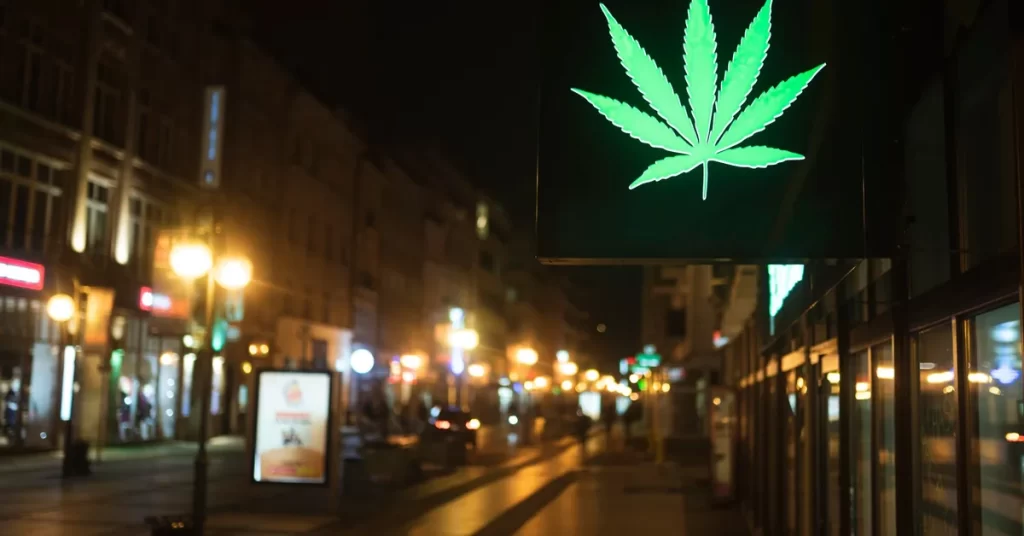
Every LA Dispensary That Made the News in 2025 Had Cameras. Not One Camera Stopped a Theft.
North Hollywood, April 2025. Masked suspects smashed through a dispensary on Hartland Street at 3:50 AM. Bags filled in under 90 seconds. Gone before LAPD arrived. All on HD camera. A month later, The Woods in West Hollywood got hit by five masked suspects. Crystal-clear footage went viral. No prevention. August, Downtown LA. Five armed suspects, another dispensary, a standoff. Every one of these spots had cameras. Not one camera stopped a theft.
Dispensary robbery prevention in LA isn't a camera problem. Los Angeles operators are recording crimes rather than stopping them. Every location that made the news in 2025 had DCC-compliant surveillance running 24/7 at the moment of entry. The cameras documented it. Nothing interrupted it.
In the first eight months of 2025, at least four major LA dispensary burglaries made headlines: North Hollywood, West Hollywood, Santa Monica, and Downtown. Every one had HD cameras rolling. None stopped entry or saved product.
Jump to: Why dispensaries are targeted | How the robbery happens | Why cameras aren't enough | Physical hardening | Live monitoring intervention | What prevention looks like | After a break-in
Why LA Dispensaries Are the Perfect Target
Cannabis dispensaries get targeted for a set of reasons that all hit harder in Los Angeles than almost anywhere else. Start with the cash. Federal banking rules still block most cannabis businesses from normal payment processing. That means cash on site, in registers, in safes, sometimes in back rooms. High-value portable products fill shelves and move easily on the black market, with no serial numbers to trace. Set hours tell crews exactly when the building will be empty.
Glass storefronts designed to showcase products make entry easy. One swing of a crowbar or one bumper through the front window. Denver data puts it plainly: cannabis businesses made up less than 1% of all businesses but accounted for roughly 10% of commercial burglaries between 2012 and 2016.
In Los Angeles, dispensary-related crime nearly doubled between 2021 and 2022. The 2025 data show no sign of that trend slowing. Once a dispensary gets hit and doesn't change its security approach, it gets hit again. Repeat targeting is well documented. Crews share intel about which spots are soft. A location that got robbed at 3 AM on a Tuesday and had the same setup the following Tuesday is an open invitation.
A Chatsworth dispensary in our monitoring network was approached by trespassers after midnight more than a dozen times between January and March 2026. Each time, an Intervention Specialist issued audio warnings, and they left. But the pattern didn't stop on its own.
Crews kept coming back because the target's profile hadn't changed. For how storefront robbery risk sits alongside DCC requirements, internal theft, and guard costs across a California cannabis operation, see the cannabis security guide for California operators.
The Playbook: 3 AM, Smash the Glass, Fill the Bags
The pattern is consistent across incidents. Burglaries cluster between 3 and 5 AM. Suspects pull up in a stolen car, often a white sedan, according to LAPD reports. They smash the front glass or ram a vehicle through the storefront. Bags get filled from display cases. Total time inside: 60 to 90 seconds. Gone before any response is possible.
What makes the LA pattern distinct from other markets is the scale and coordination. These aren't solo opportunists. Multiple suspects, stolen vehicles, pre-scouted locations, getaway routes planned in advance. Some crews have been linked to multiple hits across different neighborhoods in the same week.
Erba in Santa Monica got hit twice. In March 2025, a security guard shot and killed a suspect during an attempted robbery. In May, a different crew targeted the same location. A fatal shooting during the first attempt didn't deter the second. That tells you how organized and motivated these operations are.
Why Dispensary Robbery Prevention Requires More Than Cameras
This isn't an anti-camera argument. Cameras are a DCC requirement under § 15044, and they serve real purposes. You get evidence for a police report. Insurance claims need footage. DCC inspectors want to review recordings during audits. All of that matters. But evidence is what you collect after the crime already happened.
Every KTLA story about a dispensary robbery includes the same line: "The incident was caught on surveillance camera." That's the tell. The camera captured it. It didn't prevent it. A camera without a live operator behind it is a witness, not a guard. It records what happened. It doesn't change what's about to happen.
The footage might help police identify a suspect weeks later, but your product is already gone, and your storefront is already smashed. DCC requires 24/7 recording at a minimum of 1280x720 resolution and 15 FPS. Most operators install cameras to meet that mandate and assume they're covered.
They are, for compliance. Not for prevention. What most operators call dispensary robbery prevention is really dispensary robbery documentation. The real question isn't whether your cameras work. It's whether you're paying for documentation or prevention. The cost difference is smaller than most operators expect. See security guards vs. remote monitoring for dispensaries for a real cost breakdown.
Physical Hardening Helps. Criminals Adapt.
Bollards in front of the storefront. Reinforced doors. Security film on glass. Controlled-entry vestibules. These measures slow attackers down, and they belong in any layered security plan. A dispensary that puts in bollards after a crash-and-grab attempt is making a smart call. But hardening alone isn't the full answer. Crash-and-grab crews have shifted to heavier vehicles.
Suspects at The Woods in West Hollywood went entirely around the main entrance. The Erba attempts happened with an armed guard standing right there. Physical barriers buy you time. The real question is who's using that time to act. If nobody's watching at 3 AM, the strongest door in the building just means it takes 30 extra seconds to get in.
Time only matters if someone on the other end is doing something with it. DCC requires a monitored alarm system under Title 4. A standard alarm sends a signal; the center calls the dispensary (nobody picks up at 3 AM), then calls LAPD as a non-verified alarm.
The average response time for non-verified commercial alarms in LA runs over 30 minutes. The crime is done in 90 seconds. A Venice dispensary in our monitoring network was approached by a single trespasser at 4:30 AM on a Friday in March 2026. An Intervention Specialist issued audio warnings. The person left without entering, without police contact, and without any product leaving the building.
The Missing Piece: Live Monitoring That Intervenes Before Entry
The most effective dispensary robbery prevention in LA changes the timeline from reactive to proactive. Instead of watching footage the next morning, a live operator spots activity as it starts. Someone walking up to the storefront at 3 AM. A car circling the block. Someone testing door handles or looking through the glass. The operator sees it in real time through AI-assisted motion alerts that screen out animals, passing cars, and wind. Audio talkdown kicks in before glass breaks.
A live voice through an on-site speaker: "You are being recorded. Police have been dispatched." This stops most attempts before they turn into entries. You can see what that looks like across the real incidents our monitoring team has documented on the ValleyGuard live monitoring catches page. A Sherman Oaks dispensary in our monitoring network had a trespasser show up at 1:42 AM on a Wednesday in February. Male subject in gray pants, black jacket, carrying a blue backpack.
An Intervention Specialist issued audio warnings. LAPD was contacted. The subject left before police arrived. The whole sequence was documented with timestamps before the owner's alarm clock went off. For the ones who don't leave, police are already on the way with live video. A verified alarm with a video feed gets priority from LAPD dispatch, not the slow lane that standard alarms sit in.
The operator stays on the phone with dispatch, giving real-time suspect descriptions, travel direction, and vehicle details. This also breaks the repeat-targeting cycle. A dispensary with visible live monitoring, marked cameras, and active speaker systems becomes a harder target. Crews looking for easy hits move to the next spot on their list.
Visible deterrence shifts the risk calculation for the criminal, not just the owner. Live monitoring changes the equation for after-hours break-ins. But the operators losing the most product aren't getting robbed at 3 AM. Their biggest losses are walking out the front door during business hours. See cannabis dispensary employee theft prevention.
What Effective Dispensary Robbery Prevention Looks Like
Cameras at every entry point, parking lot, POS counter, product storage area, and the NVR room cover all the zones DCC requires. Live monitoring runs during closed hours, usually 10 PM to 8 AM. AI analytics screen out noise so operators only act on real threats. The chain moves fast: spot activity, verify the threat, hit audio talkdown, dispatch police with video, then send the owner an incident report. The whole thing happens in seconds. A Westwood dispensary in our network had several people approach at 1:08 AM on a Saturday in February.
Audio warning issued. All of them left without police contact. The owner had a timestamped incident report waiting when the morning shift started. Every incident creates a timestamped report with video clips. Those reports do three jobs: evidence for police, documentation for insurance claims, and compliance records for DCC audits. The 7-year records rule and 90-day video rule are both satisfied without the operator having to manage it separately.
Your Dispensary Just Got Hit: What to Do in the Next 24 Hours
Not every operator reads this before an incident. Some find it after. If your location was just broken into, the next 24 hours matter as much as everything that comes after.
Step 1: Secure the scene. Call LAPD and don't touch anything until officers process the site. Moving product, sweeping glass, or cleaning up before documentation is completed can create problems with both the police report and your insurance claim.
Step 2: Preserve footage immediately. Copy your camera recordings to an external drive before the NVR overwrites. If your system records on a loop, you may have days, not weeks, before that footage is gone. DCC requires a minimum retention period of 90 days, but that doesn't mean the incident footage will still be there when you need it.
Step 3: Report to DCC within 24 hours. Cannabis operators must report security incidents to the DCC within 24 hours. Failing to report is a violation in itself, separate from the break-in.
Step 4: Document for your insurer. Photograph all damage. Document missing inventory against your Metrc records. Note exact times and any footage timestamps. If you don't have a timestamped monitoring record of the incident, your insurer may reduce or deny the claim.
Step 5: Address the repeat-targeting risk. Targeted dispensaries get hit again. Criminals now know your layout, camera angles, response time, and vulnerabilities. The window between the first break-in and the second is when most operators finally upgrade from passive cameras to active monitoring.
If your dispensary was just broken into, the most important steps in the first 24 hours are calling LAPD, preserving your camera footage before the NVR overwrites it, and filing your DCC incident report within the 24-hour window. The second priority is preventing repeat attempts, because dispensaries that are targeted once almost always get targeted again if nothing changes in the security setup.
Frequently Asked Questions
Does live monitoring actually stop dispensary break-ins, or does it just record them better?
Live monitoring stops most attempts before they turn into entries. Deterrence occurs before the glass breaks: a live operator spots activity, issues an audio warning through an on-site speaker, and, in most incidents, the trespasser leaves.
For those who don't, police are already on the way with a verified video feed that gets the LAPD a priority response. Recording better is a side effect. The goal is intervention.
My dispensary already has cameras. Why isn't that enough?
Cameras document what happened. They don't change what's about to happen. Every LA dispensary that made the news in 2025 had HD cameras running. Not one camera stopped entry. The gap isn't the hardware; it's the absence of a live person watching and acting on what they see. DCC-compliant cameras meet your compliance requirement, but compliance and prevention are different objectives.
Can I stop being a repeat target once I've already been hit?
Yes, but you have to change the security profile, not just repair the damage. Repeat targeting happens because a location stays vulnerable after the first hit. Visible live monitoring, marked cameras, and active speaker systems change the risk assessment for crews who rescout the same location. A dispensary that looked easy on the first visit looks different when it has visible monitoring and a track record of police responses.
What's the response time difference between a live-monitored alarm and a standard alarm?
A standard alarm sends a signal, the station calls the listed contacts, and then dispatches police as a non-verified alarm. The average LAPD response time for non-verified commercial alarms exceeds 30 minutes. With live monitoring, police are dispatched with a verified video feed and a live operator on the phone. Verified alarms are prioritized, and the call includes real-time suspect descriptions.
Does DCC require live video monitoring for dispensaries?
DCC requires a professionally monitored alarm and 24/7 video recording. Live video monitoring covers both requirements and exceeds the minimum standard. It satisfies DCC's monitored alarm mandate while adding the prevention layer a standard alarm doesn't provide. If you're already paying for DCC-compliant cameras and a monitored alarm, the additional cost of live remote video monitoring is smaller than most operators expect.
What should I do if I can't afford 24/7 security guard coverage?
DCC requires a licensed security guard during business hours for storefront dispensaries. It doesn't require after-hours guard coverage. That's where live remote video monitoring fills the gap: a guard during hours, live monitoring from close to open. Most LA operators run a hybrid model. The math almost always comes out cheaper than 24/7 guard coverage, and you get more active coverage during the hours when most break-ins actually happen.
Cannabis facilities require specialized security coverage. Passive cameras aren't enough.
ValleyGuard provides live remote video monitoring for dispensaries throughout Los Angeles County. BSIS-licensed. DCC-compliant. Serving LA operators since 1981.
Related Articles

- Remote Video Monitoring: The Complete Guide for Commercial Properties - August 13, 2026
- How Much Does Remote Video Monitoring Cost? - August 13, 2026
- Remote Video Monitoring for Apartment Complexes and Multi-Family Properties - August 13, 2026