
Construction Site Security Systems That Actually Stop Theft
Consider this scenario: you installed cameras three weeks ago. Last night, someone stole $15,000 in copper wire while your footage just sat there recording.
Passive recording lets you see the theft after it happens — but you still lose money, time, and productivity. Cameras are witnesses, not crime prevention tools.
If your cameras already failed once, this is the point where most contractors realize they need a system that intervenes — not just records.
This article explains why construction site security cameras alone can't stop theft and what construction site security system features actually prevent crime in real time. You'll learn how proactive crime prevention works when cameras are paired with live monitoring, AI detection, and audio intervention.
Why Construction Site Security Cameras Fail to Stop Theft
The Real Problem: Recording Isn't Prevention
Cameras are passive witnesses, not deterrents. They capture footage that's useful for insurance claims and police reports — but only after you've already lost materials, tools, and project time.
Thieves don't care about being recorded. They care about whether they get caught in the act. By the time you review footage the next morning, your copper, equipment, and materials are already gone.
The gap between detection and response is what makes traditional construction site security cameras ineffective. Recording proves theft occurred, but it doesn't prevent it.
Motion Alerts Create Noise, Not Action
At this stage, most contractors aren't confused about false alarms — they're exhausted by them. The question isn't whether motion alerts work. It's how fast a real human can intervene when one matters.
Real threats get buried in noise and ignored. When an actual intruder enters the site, the alert looks exactly like the dozens of others you dismissed that night. Construction site video monitoring without intelligent filtering becomes useless background noise.
The Gap Between Detection and Response
Here's how passive systems fail:
Camera detects motion → You get an alert on your phone → You call the police → Police arrive 20–40 minutes later.
Theft takes 3–7 minutes. By the time anyone responds, the loss is already done. The footage might help identify suspects later, but your jobsite security cameras didn't stop the crime.
What Makes Construction Site Video Monitoring Different from Cameras
Live Monitoring Means Someone Is Always Watching
Construction site video monitoring isn't recording for later review — real humans are watching your site in real time. U.S.-based, trained operators monitor feeds from UL-listed centers, not overseas call centers.
Average response time: 3–5 seconds from detection to intervention. When an intruder enters your site, an operator sees it immediately and takes action.
Real-Time Audio Intervention Stops Crime in Progress
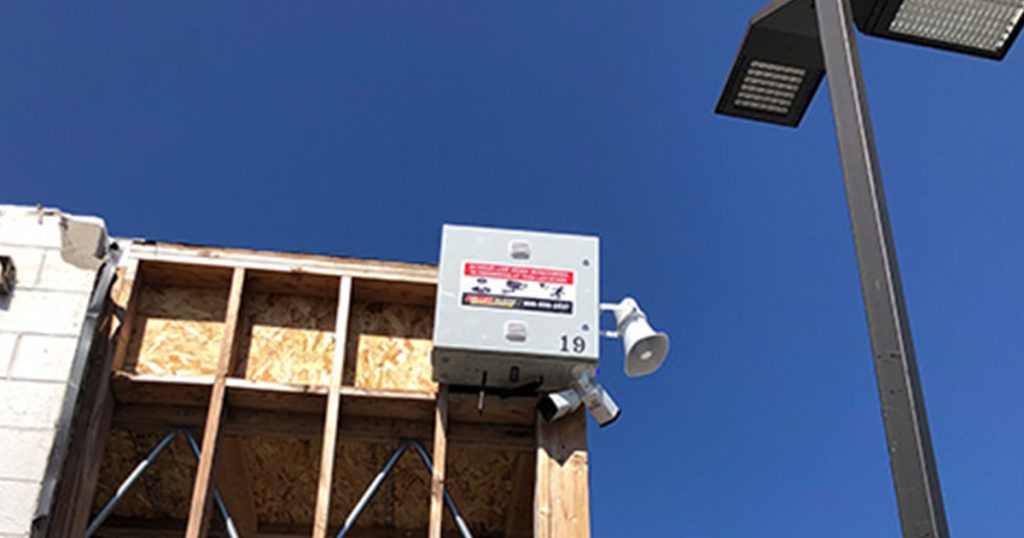
When an operator sees an intruder, they issue an audio warning through on-site speakers:
"This is Valley Alarm security. You are being recorded. Leave the property immediately."
Ninety-eight percent of intruders flee when confronted with live audio. They came expecting passive cameras — instead, someone's watching and talking directly to them. If the intruder doesn't leave, operators dispatch police with video verification, which gives your call priority over standard alarm calls.
This is what live video monitoring delivers that standard cameras can't: real-time human intervention that stops crime before theft occurs.
AI Detection Learns Your Site Layout
AI observes normal patterns and learns what "normal" looks like for your specific site. Within two weeks, false alarms drop 80–90% because the system distinguishes between authorized activity and genuine threats.
By month two, the system recognizes unusual behaviors like loitering near materials, fence climbing, or vehicles entering outside scheduled hours. This is how modern jobsite security cameras paired with AI reduce alert fatigue while catching real threats.
Proactive Crime Prevention vs. Passive Video Recording
When Security Guards Can't Cover Your Entire Jobsite
Guards are effective for 2–3 acres maximum. Larger sites require multiple guards, which quickly costs $40,000–$60,000 per month or more.
Live monitoring covers unlimited acreage with the same monthly cost. Cameras positioned strategically across your entire site feed into a single monitoring center where operators watch everything simultaneously.
That's the difference between proactive crime prevention and hoping a guard happens to be in the right place when theft occurs.
This is the point where many contractors begin to rethink their guard service contract. If you’re comparing guards vs monitoring, read this breakdown.
The Role of Temporary Construction Security Cameras
Not every construction site has power or permanent structures. Temporary construction security cameras solve this through mobile deployment options.
Mobile trailers work for sites without power infrastructure. Solar-powered pole kits secure perimeter areas. Both are relocatable as your project progresses — when you pour foundations and move to framing, your security moves with you.
Rental options make sense for short-term projects. Purchase makes sense if you run multiple concurrent jobsites.
Why Los Angeles Jobsites Are High-Risk Targets
Copper prices hit all-time highs in 2024 and stayed there. Los Angeles has one of the highest construction theft rates in California. Long project timelines mean extended vulnerability — a 12-month build gives thieves repeated opportunities to study patterns and strike during gaps in security coverage.
How Live Video Monitoring Works on Real Construction Sites
What Happens When an Intruder Is Detected
Here's the timeline when someone enters a monitored construction site:
- 12:47:03 AM — AI detects person climbing perimeter fence
- 12:47:08 AM — Alert reaches monitoring center (5 seconds)
- 12:47:15 AM — Operator reviews feed, confirms threat (7 seconds)
- 12:47:22 AM — Live audio warning issued through speakers (7 seconds)
- 12:47:35 AM — Intruder visible on camera moving back toward the fence
- 12:47:52 AM — Intruder exits property (total elapsed time: 49 seconds)
- 12:48:10 AM — Incident report generated with video clips
Contrast this with passive cameras: discovery happens 8+ hours later when you arrive on-site. By then, copper's gone and resold. Construction site video monitoring stops crime before loss occurs.
Case Study: San Fernando Valley Concrete Plant
A concrete plant in the San Fernando Valley experienced repeated copper theft despite having cameras installed. They switched to live monitoring.
At 2:11 AM, an intruder cut through the perimeter fence. AI detected the breach and alerted the monitoring center. An operator issued a live audio warning within seconds. The intruder fled without taking anything. Valley Alarm provided video evidence to the police.
Before live monitoring: three theft incidents, $22,000 in losses. After live monitoring: zero successful thefts in 14 months.
When to Upgrade from Cameras to Live Monitoring
Use this decision framework to determine if your construction site security systems need upgrading:
- Your site is larger than 2 acres, and cameras alone can't cover all entry points effectively
- High-value materials stay on-site overnight — copper wire, tools, heavy equipment
- You've experienced theft incidents despite having cameras installed
- You need video-verified police dispatch for faster response priority
- You want incident reports with timestamped evidence for insurance claims
If any of these apply, passive cameras aren't enough.
Choosing the Right Construction Site Security Systems
What to Look for in Jobsite Security Cameras
Night color cameras show details in low light that infrared cameras miss. Standard IR cameras show a grayscale image — night color cameras show clothing color, vehicle color, and facial features even in darkness.
Two-way audio capability lets operators issue warnings. Without audio, monitoring is passive even with live operators watching.
AI detection eliminates false alarm fatigue by learning what's normal for your specific jobsite. Motion detection alone triggers constantly and becomes ignored.
Weatherproof and vandal-resistant housings survive construction site conditions. Dust, rain, vibration from heavy equipment — jobsite security cameras need industrial-grade construction.
Mobile and solar options work when your site lacks power or permanent structures. As your project progresses, security relocates without rewiring.
Why ValleyGuard Is Built for Construction Sites
ValleyGuard combines all these elements into a complete construction site security system designed specifically for proactive crime prevention.
U.S.-based monitoring centers that are UL-listed ensure consistent quality and fast response. AI detection reduces false alarms by 80–90% after learning your site. Human verification means real operators review every alert before taking action. Live audio deterrence stops 98% of intrusions before theft occurs. Video-verified 911 dispatch gives your emergency calls priority over standard alarms.
Incident reports with timestamps provide documentation for insurance claims and police investigations. Coverage across Los Angeles County includes installation, monitoring, and relocation as projects progress.
Construction sites need more than passive jobsite security cameras. They need systems that prevent theft in real time.
Replace passive cameras with live monitoring.
Get construction monitoring pricing for your site.
Tell us site size + what’s being stolen. We’ll recommend coverage + response plan.

- How Remote Video Monitoring Replaces Security Guards [Save $8K/Month] - February 4, 2026
- Remote Video Monitoring FAQs (For Businesses) - December 30, 2025
- Video Guard Monitoring for Cannabis Businesses Part 2 - May 5, 2022