
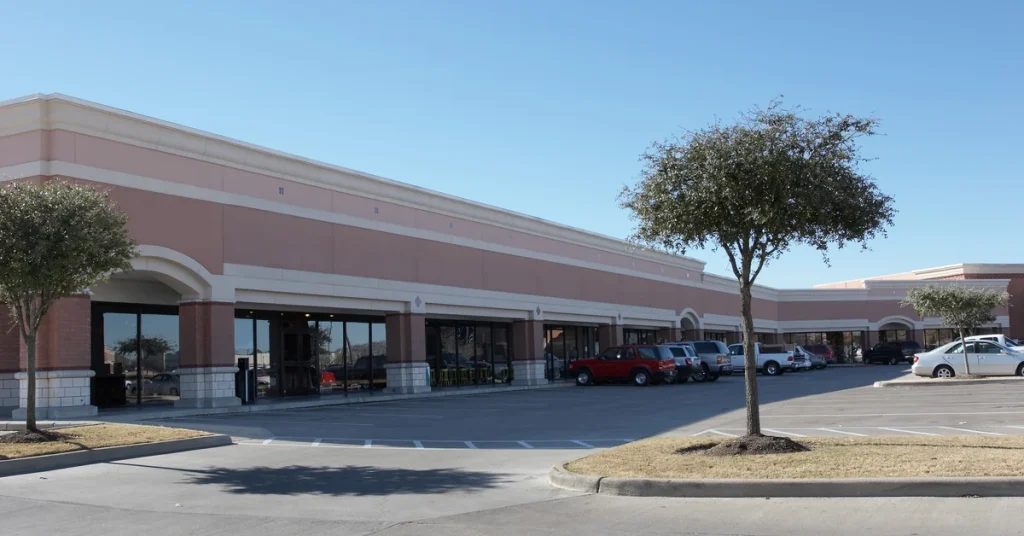
The Stores Are Locked. The Parking Lot Is Wide Open.
Retail security spending goes inside: cameras over the registers, an alarm on the back door, maybe a loss prevention contract for the anchor tenant. Meanwhile nobody's watching the two acres of asphalt everyone crosses to get in.
The lot is the landlord's problem, and after the last store closes, it's the part of the property with nothing covering it.
Shopping center live video monitoring covers parking lots, storefront rows after closing, loading and trash areas, and common walkways, with live operators who can issue audio warnings before an incident becomes a police report or a tenant claim. Valley Alarm monitors retail properties across Greater Los Angeles, Ventura County, and the Inland Empire.
This sits within the wider remote video monitoring guide if you want the service explained end-to-end first.
Jump to: Where the risk is | Lot patrols | Daytime risk | Incident documentation | No wiring needed
The Lot Is the Property's Real Risk
Center owners tend to inherit tenants' store-shaped view of security. The landlord's exposure is different.
Vehicle crime. Break-ins, catalytic converter theft, and vandalism, often in the corners of the lot where lighting is weakest and the storefronts can't see.
Loitering and encampments. Behind the buildings, in the loading corridor, and in landscaped edges. Left alone, these become tenant complaints, then lease negotiations.
After-hours attempts at storefronts. Roll-up doors, rear entrances, and glass on the units that don't have their own monitored alarm.
Dumping and trash-area damage. Someone else's mattress, your disposal cost.
Every one of those lands on the landlord, not the tenant.
What a Lot Guard Actually Covers
The standard answer is a security patrol, and a patrol is a schedule, not coverage.
A guard driving a loop is elsewhere most of the time, and the route is easy to learn by watching. Industry-wide, a single guard shift runs $3,000 to $5,000 per month, and round-the-clock coverage for one property typically exceeds $10,000 per month. Those are industry figures, not Valley Alarm's.
Live monitoring covers every camera zone at the same time, which for a shopping center means the whole lot, the loading corridor, and the storefront row at once. When something happens, an Intervention Specialist speaks through the on-site speaker, and about 98% of intrusions end right there.
Business Hours Are Not Safe Hours
Retail owners assume that the risk window opens at close. The data says otherwise: 43% of ValleyGuard's logged incidents happen during normal business hours.
A busy lot is cover. Someone moving between parked cars in the middle of the afternoon looks like a shopper until they don't, and by then they're three rows away.
Documentation Your Tenants and Carrier Will Ask For
A shopping center generates claims. A customer's car gets hit in the lot. A tenant says the center isn't secure and wants a rent concession. You get asked what measures were in place when something happens.
Monitored incidents come back documented with timestamped video and operator notes. That record does three things: it settles disputes with facts, it supports claims, and it shows a pattern over time so you know whether the problem is the north lot at 11 PM or the loading corridor at 6 AM.
That's what turns a lighting upgrade or a fence repair into a decision instead of a guess.
Coverage Without Rewiring the Center
Older centers rarely have power or network where the cameras need to go, and running conduit across a lot means trenching, permits, and closed parking rows.
Solar-powered pole-mounted cameras avoid all of that. They mount on existing light poles or their own pole; they run on battery and solar power with cellular connectivity; and they go where the incidents actually happen rather than where the wiring already is. That approach is covered in commercial security without wiring.
At an Inglewood property on November 5, 2025, at 10:04 PM, an intruder was stopped, and a cut gate entry point was discovered in the process, which is the kind of thing a lot of people walking at 9 AM never turn up. More documented incidents are on the ValleyGuard live monitoring catches page.
Frequently Asked Questions
Does shopping center live video monitoring cover individual tenant spaces?
Coverage is the landlord's footprint: parking lots, common walkways, loading and trash areas, and the storefront row from outside. Individual store interiors remain with each tenant's system, though you can add exterior coverage for specific units that keep getting hit.
Can monitoring handle loitering without involving police every time?
That's most of what it does. An Intervention Specialist issues an audio warning as soon as the activity is flagged, and about 98% of intrusions end at the warning with no dispatch. Police are contacted when someone stays, and the call includes video verification.
Will this reduce what we spend on security patrols?
Often it changes what the patrol's for rather than eliminating it. Monitoring covers the whole property continuously, so if you keep a patrol, it gets used for the things that actually need a person on site. The cost comparison is in how much does remote video monitoring cost.
How do you cover a lot that has no power where the cameras need to go?
Solar-powered, pole-mounted cameras run on battery and solar power, with cellular connectivity, so they go where the risk is rather than where the conduit is. There's no trenching and no electrical permit.
What do we get after an incident?
An incident report with timestamped video, operator notes, and what the Specialist did, including any law enforcement contact. That's the documentation that settles a tenant dispute or supports an insurance claim.
Cover the lot, not just the registers.
Valley Alarm monitors shopping centers and retail properties across Greater Los Angeles, Ventura County, and the Inland Empire. Talk through coverage for your center.
Related Articles
- →Remote Video Monitoring: The Complete Guide
- →How Remote Security Monitoring Works
- →ValleyGuard Video Monitoring vs Live Security Guards
- →How Much Does Remote Video Monitoring Cost?
- →Commercial Security Without Wiring
- →Live Video Monitoring Catches on Camera
- →Remote Video Monitoring for Los Angeles Shopping Centers

- Remote Video Monitoring: The Complete Guide for Commercial Properties - August 13, 2026
- How Much Does Remote Video Monitoring Cost? - August 13, 2026
- Remote Video Monitoring for Apartment Complexes and Multi-Family Properties - August 13, 2026