
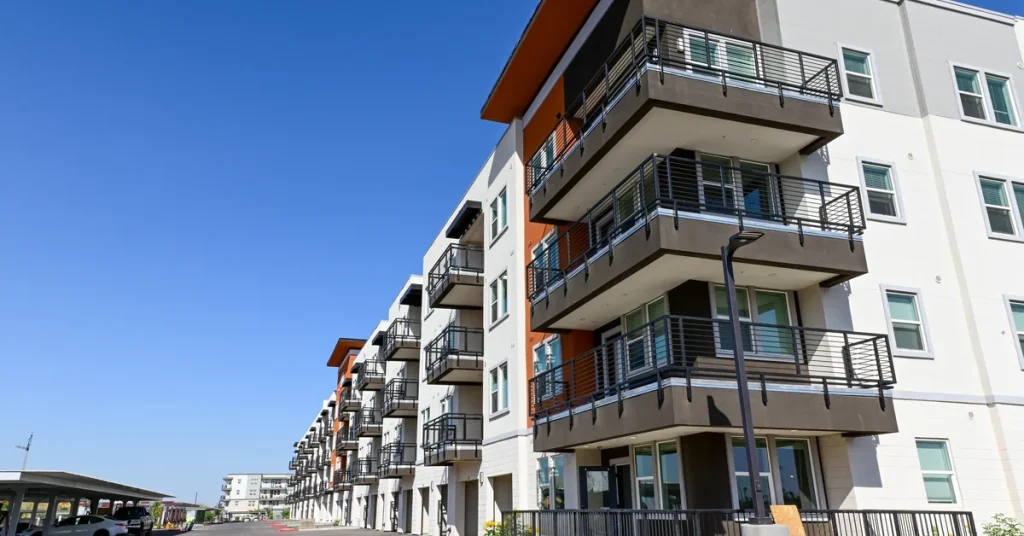
Your Tenants Live There. That's What Makes Security Hard.
At a warehouse, anyone on the property after 6 PM is a problem. At a 90-unit apartment complex, someone crossing the parking structure at 2 AM is probably in unit 4C, coming home from a shift.
That's the whole difficulty. The place is never closed, legitimate activity never stops, and the people you're protecting look exactly like the people you're watching for.
Apartment remote video monitoring covers the common areas of multi-family properties rather than residences: parking structures, perimeter and gate access, package and mail areas, laundry rooms, pool decks, and trash enclosures. Live operators verify activity before responding, allowing an Intervention Specialist to address trespassing and encampment activity without a confrontation between staff and residents.
This sits within the wider remote video monitoring guide if you want the service explained end-to-end first.
Jump to: What goes wrong | Why guards struggle | How it works | Incident documentation | Daytime risk | Rehab and turnover
What Actually Goes Wrong at Multi-Family Properties
The threat list differs from that of a commercial site, and so does the damage.
Parking structures. Catalytic converter theft, break-ins, and vehicles that don't belong to anyone living there. A structure with an open entry and no attendant is a covered, unlit workspace.
Package areas. Deliveries pile up in a lobby or mail room, and following a resident through the door is easy.
Encampments in the margins. Alleys, side yards, stairwells, and the strip behind the trash enclosure. Once someone settles in, getting them to leave becomes much harder.
Common area damage. Laundry rooms, pool gates, and elevator lobbies, usually overnight, usually recorded by cameras nobody was watching.
Every one of those costs twice: once for the repair, and again if a tenant decides not to renew.
Why Guards Are an Awkward Fit Here
Guard coverage runs into problems at residential properties that don't come up at a closed commercial site.
A guard can't challenge people freely, because most of them are residents. Ask for ID too often, and you generate complaints. Ask too rarely, and the presence is theatrical. Either way, you've got a person on foot covering a property with multiple buildings, a parking structure, and several entrances, so most of it is left unwatched most of the time.
Cost is the other half. A single guard shift runs $3,000 to $5,000 per month industry-wide, and round-the-clock coverage for one property typically exceeds $10,000 per month. Those are industry figures, not Valley Alarm's. For most owners, that number only pencils out for a fraction of the hours the property is actually exposed.
Remote monitoring covers every camera zone at once, and the person who speaks up isn't standing in front of your resident.
How It Works on an Occupied Property
Cameras go where the incidents happen, not where the people live.
That means perimeter and gates, parking structure levels and ramps, package and mail areas, laundry and amenity rooms, trash enclosures, and the paths between buildings, because that's where the reports come from. Interior unit hallways get covered only where a property already has cameras and a reason for them.
AI detection flags activity in those zones, and an Intervention Specialist reviews it in real time. If it's a resident walking to their car, nothing happens. If it's someone working a car door handle, an audio warning goes out through the on-site speaker.
That warning is what makes this work on a tenant-occupied property. About 98% of intrusions end there, with no dispatch and no confrontation. Nobody on your staff had to walk up to a stranger in a dark structure at 1 AM.
When someone doesn't leave, the Specialist escalates and calls it in with eyes on the person, which carries more weight than an unverified alarm. The full sequence is in how remote security monitoring works.
The Documentation Nobody Thinks About Until They Need It
Multi-family properties generate disputes. A tenant says their car was broken into while it was inside a secure structure. You get asked whether the gate was working that night. An HOA board wants to know why the pool area keeps getting damaged.
Every monitored incident produces a report with timestamped video and operator notes. That's the difference between "we think it happens on weekends" and a record you can hand to a carrier, a board, or an attorney.
It also tells you where to spend money. Three months of incident reports will show you whether the problem is the gate, the structure, or the back alley, which isn't always where owners assume.
Daylight Is Not Safe Either
The assumption that residential risk is an overnight problem doesn't hold. 43% of ValleyGuard's logged incidents happen during normal business hours, when the property is occupied, and people are moving around.
That matters more at apartments than anywhere else, because daytime activity is exactly what nobody questions. Someone walking a hallway with a package at 2 PM looks like a neighbor.
Properties Mid-Renovation or Between Tenants
A building being repositioned is a different problem. Units are empty; contractors come and go; copper and appliances sit on site; and the normal population that makes a property feel occupied isn't there yet.
Solar-powered mobile security trailers and pole-mounted cameras cover that phase without a permanent installation, and they are removed once the property stabilizes. That approach is covered in commercial security without wiring.
Frequently Asked Questions
Does apartment remote video monitoring watch inside units or hallways?
No. Coverage is in common areas and exterior zones: parking structures, gates and perimeter, package areas, laundry rooms, amenity spaces, and trash enclosures. Residences aren't monitored, and that boundary is set during the site walk.
Will residents be bothered by audio warnings?
Warnings are directed at specific activity in specific zones, so they aren't broadcast across the property, and most residents never trigger one. When one does go out, it usually ends the situation right there, which is quieter than sirens or a staff confrontation.
Is monitoring cheaper than hiring a guard for the property?
Typically yes, on a property with long exposed hours and multiple buildings, since one Intervention Specialist covers every zone at once and a guard can't. Guard coverage runs $3,000 to $5,000 per shift monthly industry-wide. Monitoring's quoted per site, so the comparison comes from your quote.
What happens if someone sets up in the alley behind the property?
The Specialist issues an audio warning as soon as the activity is detected, which is a different conversation than the one you're having after someone has set up. If they don't leave, law enforcement is contacted with video verification, and the incident is documented for any subsequent process.
Can it work with cameras we already have?
Often, depending on the equipment and its positioning. A site walk determines what's reusable and what needs to be replaced or added to cover the zones that actually matter.
Cover the parking structure, the package room, and the alley.
Valley Alarm monitors multi-family and apartment properties across Greater Los Angeles, Ventura County, and the Inland Empire. Talk through the zones that need coverage at your property.
Related Articles

- Remote Video Monitoring: The Complete Guide for Commercial Properties - August 13, 2026
- How Much Does Remote Video Monitoring Cost? - August 13, 2026
- Remote Video Monitoring for Apartment Complexes and Multi-Family Properties - August 13, 2026