
Most construction and industrial sites face a common problem: how do you secure a location that's miles from the nearest substation, has no existing infrastructure, and operates around the clock?
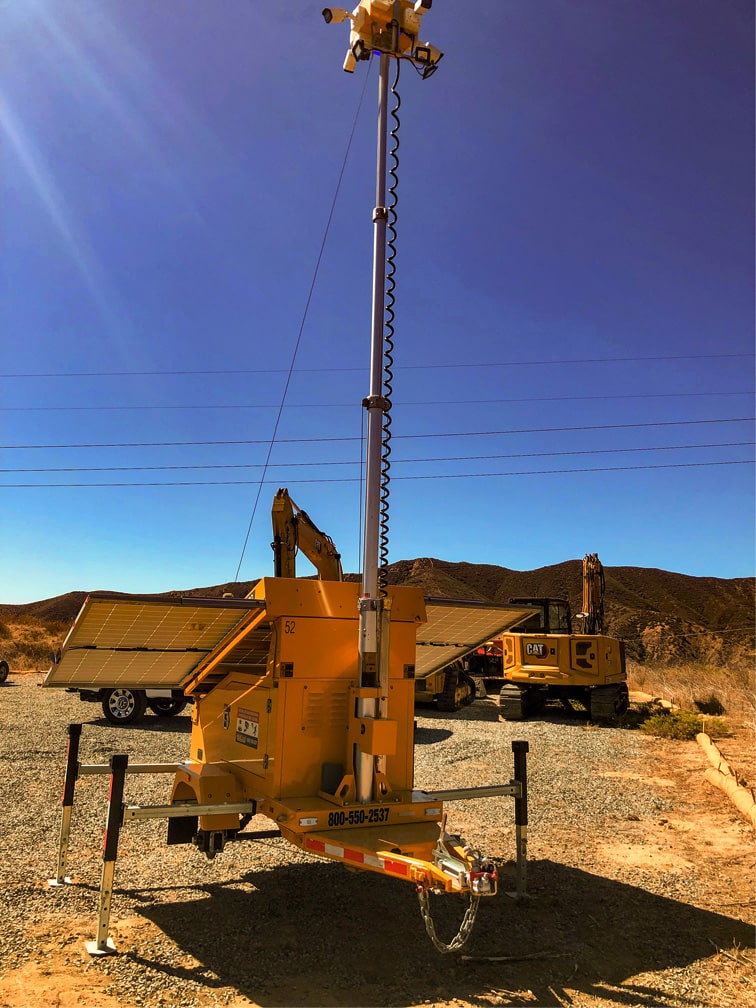
On October 6th, 2025, our team delivered and deployed a ValleyGuard mobile security trailer to a remote industrial site in Castaic, California. This deployment demonstrates why mobile security trailers in Palmdale and across Antelope Valley have become the go-to solution for energy sector projects, remote construction sites, and temporary industrial operations.
The location presented exactly the kind of challenges that make traditional security measures impractical—no power lines, limited cell coverage, and terrain that makes regular guard patrols ineffective. These same conditions exist at industrial operations throughout LA County's northern reaches, where development pushes beyond municipal infrastructure.


Why Remote Sites Need Different Security Solutions
Traditional security approaches fail in remote locations for straightforward reasons. Security guards can't patrol vast areas effectively, especially at night when most intrusions occur. Running power lines to temporary sites costs more than the equipment being protected. And conventional cameras without live monitoring just record crimes instead of preventing them.
The Castaic site required 24/7 coverage despite being far from municipal services. Materials and equipment at remote locations attract thieves precisely because response times are slow and visibility is low. We've documented construction site theft patterns across Los Angeles County showing that remote locations face elevated incident rates compared to urban jobsites—yet they typically receive less security investment.
How Solar-Powered Trailers Solve the Power Problem
Our mobile security trailers run entirely on solar power, storing enough energy to operate cameras, lights, and communication systems for days even without sun. The Castaic unit includes:
- Four night color cameras providing full-site coverage
- AI detection that distinguishes between wildlife, weather, and actual threats
- Two-way audio allowing our intervention specialists to challenge trespassers in real time
- Cellular connectivity that works even in areas with weak signal
- Permanent strobe lights for visibility and deterrence
The whole system draws less power than a typical security guard's vehicle idling for a shift. No generators, no fuel delivery, no extension cords running across the site. This same solar configuration protected a similar deployment in Pomona where grid power wouldn't arrive for six months.
Live Monitoring Changes the Response Timeline
Here's what happened at a Hollywood construction site in mid-September: Just after midnight, a man crouched down and lifted a chain-link fence so his partner could crawl underneath. He then started climbing over himself. Our AI analytics detected them the moment they touched the fence. Within seconds, a ValleyGuard intervention specialist issued a live audio warning through the unit's speakers:
"Attention. You have entered a secure area. All of your activities are being monitored live. You are trespassing and you need to leave immediately. If you do not leave, I will dispatch the police."
The climber hesitated but kept going. Our operator issued a more specific warning:
"Attention to the intruders that just hopped over the fence. Be advised, your actions are being monitored and recorded by a live operator. Leave this area now, or police will be dispatched."
Both trespassers turned and left—no damage, no theft, no delay for the property owner. You can see the full incident with video at the Hollywood jobsite.
That's the difference between recording crime and stopping it. Traditional cameras would have captured footage for insurance claims. A guard might have been on the other side of the property. We documented a similar response at a Pasadena property where live audio intervention achieved the same result.
The detailed comparison between ValleyGuard monitoring and traditional security guards shows response time differences that matter when seconds count. Remote locations amplify these advantages because physical patrol routes can span acres.
Supporting Our Palmdale and Castaic Coverage Area
This Castaic deployment expands our effective coverage north along the 5 corridor, complementing our established presence in Palmdale and across Antelope Valley. The mobile trailers give us flexibility to protect projects wherever they're located—from remote oil and gas operations to construction sites that haven't broken ground yet.
We've positioned trailers at various sites including:
- Bridge construction projects where utilities won't arrive for months
- Equipment staging areas miles from the nearest building
- Cannabis grows in agricultural zones
- Jobsite during construction phases
The technology works the same whether you're protecting a downtown LA high-rise or a work site in the middle of nowhere. Our recent concrete plant protection project in San Fernando Valley demonstrated how quickly we can deploy to industrial facilities that need immediate coverage.
Similar remote terrain challenges exist in Ventura County and the Inland Empire, where we've installed trailers at sites ranging from aggregate plants to temporary logistics hubs. The difference is that remote locations have no backup options if security fails.
When to Consider Mobile Security Trailers
Remote industrial sites aren't the only places where mobile trailers make sense. Any temporary location, high-theft area, or project without existing infrastructure should evaluate this approach.
Common scenarios include:
- Construction projects in early stages before power is connected
- Sites where running electrical service costs more than the security system
- Locations that need coverage for 3-12 months, not permanent installation
- Areas where theft has already occurred and insurance requires better protection
- Projects that move locations as work progresses
The Castaic site checked several of these boxes. Temporary location, remote setting, valuable equipment on-site, and a client who needed coverage immediately—not after permits cleared for permanent electrical work. The Hollywood jobsite where we stopped fence-climbers faced similar timeline pressures during its foundation phase.
Cost Comparison: Trailers vs. Traditional Security
We don't publish pricing because every site has different requirements. But here's the reality: mobile security trailers deliver comprehensive coverage at a fraction of what traditional guard services cost.
Guards for a remote site like this one would require:
- Two guards minimum (one can't cover the whole property)
- 24/7 shifts meaning 6-8 total guards accounting for days off
- Supervisor oversight
- Transportation to a remote location (increasing labor costs)
- Higher insurance for remote work
- Risk of no-shows, which happens more often at distant sites
One trailer with live monitoring delivers better coverage, operates continuously without breaks or shift changes, and responds to threats in seconds instead of minutes. An automotive dealership break-in we prevented in San Fernando Valley illustrated this speed advantage—the suspect never made it past the perimeter because our intervention happened before damage occurred.
Technical Capabilities That Matter in Remote Locations
The Castaic trailer includes features specifically valuable for isolated sites:
Night Color Cameras: Standard night vision turns everything green and loses detail. Our night color cameras use ambient light to deliver full-color footage even in low light, making it easier to identify people, vehicles, and specific actions.
AI Learning: After a few days, the system learns normal patterns—wind moving equipment, wildlife passing through, regular vehicle movements. This reduces false alarms while keeping sensitivity high for actual threats. Understanding how remote security monitoring technology works helps explain why this learning period matters for long-term effectiveness.
Cellular Connectivity: Reliable cellular connection ensures the system stays online and maintains communication with our monitoring center. Critical for remote areas where infrastructure is limited.
Weatherproof Design: Remote sites experience extreme temperature swings. The trailer's climate-controlled equipment housing protects cameras and electronics from harsh conditions year-round.
Self-Monitoring: The system reports its own health status regularly. If something stops working, we know immediately—we don't wait for an incident to discover the cameras went offline.
Integration with Construction Site Security
For contractors working across multiple locations, mobile trailers integrate with our broader construction site security camera systems. Sites that start with temporary trailer coverage can transition to permanent installations as buildings progress, keeping the same monitoring service and incident response protocols.
The Castaic deployment follows similar projects where we've protected everything from grading operations to vertical construction. Each site presents different security challenges, but the approach stays consistent: detect intrusions early, respond immediately, document everything.
Expanding Coverage Across LA County
Valley Alarm maintains trailer inventory positioned throughout Southern California, allowing us to deploy to new sites within 48 hours. The Castaic unit was on-site Monday morning, operational by Monday afternoon.
Our coverage extends from urban construction sites to remote industrial operations across multiple counties. Whether you're securing a site in Castaic, Acton, Lake Hughes, or anywhere else work takes you beyond city limits, the same capabilities apply. We've even handled agricultural and cannabis operations in remote locations where traditional security infrastructure simply doesn't exist.
What Happens During a ValleyGuard Response
When the system detects activity, here's the exact sequence:
- AI flags unusual movement (typically 2-4 seconds after motion starts)
- Alert routes to our monitoring center (under 1 second)
- Intervention specialist reviews live camera feed (3-5 seconds)
- If verified threat, specialist issues live audio warning through two-way speakers (under 6 seconds total elapsed)
- If intruder doesn't leave, specialist dispatches police while maintaining visual
- Specialist documents entire incident with timestamps and screenshots
- Client receives detailed report within one hour
Total response time from detection to intervention: typically under 10 seconds. Compare that to a guard walking across a 5-acre site or driving to a remote section of the property. The fence-climbers stopped at an East Hollywood property demonstrated this same rapid response—detection to successful talkdown within seconds.
Frequently Asked Questions About Mobile Security Trailers
Request a Site Security Assessment
If you're managing a remote site, temporary project, or any location where traditional security approaches won't work, we can evaluate your specific situation and recommend the right solution.
Our Castaic deployment joins hundreds of other mobile trailer installations we've completed over the past three years across LA County and the Inland Empire. The technology works, the approach makes financial sense, and the results speak for themselves.
Contact Valley Alarm to discuss mobile security trailers for your site. Our team evaluates your property, explains the coverage options, and provides transparent pricing based on your actual needs—not generic packages.

- Securing Remote Cannabis Grows in Southern California - February 27, 2026
- Your Biggest Cannabis Security Threat Isn’t the Guy with the Ski Mask - February 27, 2026
- Why LA Dispensaries Keep Getting Robbed — And What Actually Stops It - February 27, 2026