
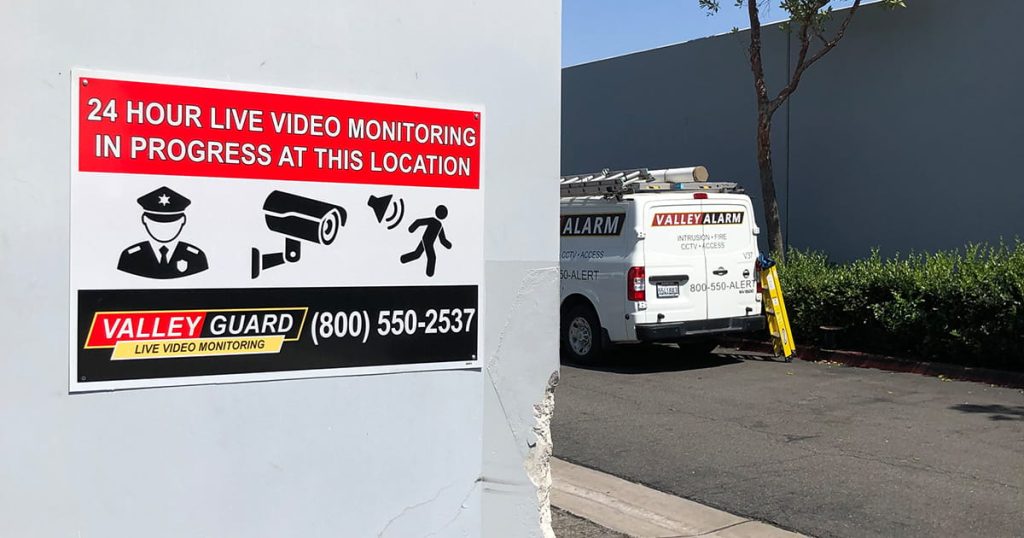
Remote Video Monitoring for Construction Sites That Replaces Security Guards
Here’s a scenario: You're paying $10,000+ per month for security guards at your Los Angeles construction site. Last week, someone still broke in and stole $15,000 in copper wire—while your guard was on a bathroom break.
Sound familiar?
Security guards for construction sites can't be everywhere at once. They take breaks. They call in sick. And even when they're on-site, one person can't monitor every entrance, material pile, and piece of equipment simultaneously.
Most contractors don’t look for remote video monitoring until after guards fail — because that’s when the math finally becomes undeniable.
That's why contractors across Los Angeles are switching to remote video monitoring—a system that provides constant coverage at a fraction of the cost.
Here's how remote video monitoring works, what it costs compared to security guards, and why contractors managing jobsites in Los Angeles, Glendale, Burbank, and the San Fernando Valley are making the switch.
What Is Remote Video Monitoring for Construction Sites?
Remote video monitoring isn't just cameras that record footage for later review. It's live humans watching AI-powered cameras in real time, responding to threats as they happen, and stopping crime before theft occurs.
How a Remote Video Monitoring System Works
When you install a remote video monitoring system on your construction site, here's what happens when someone tries to break in:
AI-powered cameras detect motion or intrusion at any entry point. Alerts are sent instantly to a live monitoring center staffed by U.S.-based operators. An operator reviews the video feed in real time to verify whether the threat is real. If the threat is confirmed, the operator issues a live audio warning through on-site speakers. If the intruder doesn't leave immediately, the operator dispatches police with video verification. An incident report is sent to the contractor with timestamped footage and details.
Unlike a security guard who can only be in one place at a time, remote video monitoring covers your entire jobsite simultaneously. When an AI-powered camera detects motion at Gate 3, a live operator can issue an audio warning while simultaneously watching cameras at your material storage area.
This is what makes construction site video surveillance effective—multiple cameras feeding into one monitoring center where trained operators can see everything happening across your site at once.
Construction Site Video Surveillance vs. Remote Monitoring
Not all video systems provide the same level of protection. Here's the difference:
Traditional CCTV: Records only, no human response, motion alerts (often false), provides evidence after crime, no police dispatch.
Remote Video Monitoring: Live monitoring plus recording, live audio warnings, AI detection with human verification, prevents crime before it happens, video-verified 911 calls.
Remote monitoring is proactive prevention, not passive recording. Standard construction site security cameras show you what happened after your materials are gone. Remote monitoring stops intruders before they take anything.
The Real Cost: Security Guards vs. Remote Video Monitoring
Before we explain how remote video monitoring works in different scenarios, let's talk about what you're actually spending on security—and what you could be saving.
What You're Actually Paying for Security Guards
Most contractors underestimate the true cost of hiring security guards for construction sites. Here's the real breakdown:
Base rate runs $50-60 per hour. For 12-hour overnight shifts, that's $600-720 per night. Monthly cost for 30 nights: $18,000-21,600. Add overtime, holidays, and workers compensation insurance—that's another 20-30% on top of the base rate. Total monthly cost for ONE guard: $21,600-28,000.
For contractors managing multiple jobsites, the costs multiply fast. Three jobsites requiring guards equals three separate guard teams, which runs $64,800-84,000 per month. Plus management overhead, replacement shifts for sick days, and coordination costs.
Guard limitations create additional problems. One guard can only patrol 2-3 acres effectively. Bathroom breaks, lunch breaks, and shift changes create gaps in coverage. A single guard can't watch all entry points simultaneously. Sick days and no-shows mean coverage gaps on short notice. Guards can be intimidated or targeted by organized theft rings who study their patrol patterns.
Remote Video Monitoring Costs 70% Less
Typical remote monitoring costs run $2,000-4,000 per month depending on site size. That system covers your entire site—not just one person's patrol route.
There's no overtime, no sick days, no workers compensation insurance to manage. The system scales across multiple sites without multiplying headcount. Average savings: $15,000-24,000 per month per site.
What you get for that monthly cost: 24/7 monitoring with live operators watching feeds, multiple cameras covering all entry points, AI detection combined with human verification to reduce false alarms, live audio warnings to deter intruders before they steal anything, video-verified police dispatch for faster response priority, and incident reports with timestamped footage sent within minutes of any event.
Contractors also benefit from mobile security trailers that can relocate as projects progress, eliminating the need to hire new guard teams when you move to a different phase or location.
What Contractors Save by Switching
Consider a 5-acre jobsite in San Fernando Valley:
With guards: Two guards needed to cover 5 acres = $36,000-42,000 per month. You get limited coverage with patrol gaps and no incident documentation.
With remote video monitoring in Los Angeles: Six to eight cameras plus live monitoring = $3,500-5,000 per month. You get full site coverage, instant response, and video evidence.
Savings: $31,000-37,000 per month, which equals $372,000-444,000 per year.
Why Security Guards for Construction Sites Can't Cover Everything
Security guards aren't bad at their job—they're just limited by human biology and economics.
Coverage Gaps Guards Can't Eliminate
One guard can effectively patrol 2-3 acres maximum. They can only be in one location at a time and can't watch multiple entry points simultaneously. Break times, bathroom breaks, and lunch periods create unavoidable gaps in coverage.
Jobsite challenges make guard coverage even harder. Large equipment blocks sightlines. Material piles create blind spots. Multiple entry points—gates, fence cuts, perimeter access points—mean thieves can enter while a guard is patrolling elsewhere. Organized theft rings study patrol patterns and strike during known gaps.
Night shift fatigue compounds the problem. Alertness naturally decreases after midnight. Long, uneventful shifts lead to complacency. Mobile phone distractions during quiet hours reduce effectiveness.
These aren't problems with individual guards—they're inherent limitations of the single-person patrol model.
Inside Jobs and Guard Corruption Risks
This is an uncomfortable truth contractors don't like discussing, but it's a real risk. Guards can be bribed or coerced by organized theft rings.
Some guards tip off thieves about patrol schedules, camera locations, and high-value materials. Inside jobs are harder to prevent when guards have physical access to your site, keys, and knowledge of your security setup.
Remote monitoring eliminates this entire risk category. Operators are never physically on-site, so they have no access to keys, materials, or equipment. Multiple operators rotate shifts, meaning there's no single point of failure or corruption opportunity. All activity is logged and recorded with multiple layers of oversight.
The monitoring center doesn't know your site layout beyond what cameras show. Operators can't tell thieves when deliveries arrive or where you store copper. That separation of physical access from monitoring capability makes remote systems inherently more secure against insider threats.
The Scalability Problem
Security guard costs don't scale efficiently. You need one guard per 2-3 acres of coverage. Multiple jobsites require multiple guard teams. Your security costs multiply linearly with coverage area—double your acreage or add a second site, and you double your guard costs.
Remote monitoring scales differently. One monitoring center can cover unlimited sites. You add cameras to existing monitoring infrastructure without adding headcount. Cost per site actually decreases as you add locations because the monitoring infrastructure is already in place.
How 24/7 Monitoring Protects Los Angeles Construction Sites
Here's what happens when remote video monitoring detects an intruder—from first motion to police dispatch.
What Happens During an After-Hours Intrusion
This is a real timeline from a Los Angeles jobsite:
11:43 PM — AI camera detects motion near south gate
11:43 PM — Alert sent to monitoring center (3-second delay)
11:43 PM — Operator reviews live video, confirms human intruder
11:44 PM — Operator activates on-site speaker: "This is Valley Alarm security. You are being recorded. Leave the property immediately."
11:44 PM — Intruder looks directly at camera, starts moving toward exit
11:45 PM — Operator continues monitoring until intruder fully exits property
11:47 PM — Incident report sent to contractor with video clip
Total elapsed time from detection to resolution: 4 minutes. Zero theft occurred.
If the intruder doesn't leave after the audio warning, the process escalates. The operator calls 911 with video verification, which gives the call priority over standard alarm calls.
Police prioritize video-verified calls because they know the threat is real, not a false alarm. The operator stays on the line with 911, providing real-time updates about the intruder's location and actions.
A security guard patrolling this same site might not discover the intrusion until 20-30 minutes later—by which time the copper wire is already gone. That's the difference between proactive video monitoring and reactive security.
AI Detection That Learns Your Jobsite
Remote monitoring gets smarter over time through AI learning. Here's how the system improves:
First week: AI learns normal patterns—worker arrivals, delivery trucks, legitimate traffic, regular vehicle movement past the site. The system builds a baseline of what "normal" looks like for your specific jobsite.
Week 2+: False alarms drop by 80-90% because the AI filters out trees moving in wind, animals crossing the frame, and car headlights from the street. The system knows these aren't threats.
Month 2+: AI recognizes unusual patterns like someone lingering near materials, vehicles entering outside scheduled hours, or people approaching from unusual directions. It flags these for operator review even if they haven't triggered a hard perimeter breach yet.
Benefits over guards: AI never gets tired or complacent. It doesn't miss motion in blind spots. It processes multiple camera feeds simultaneously—something impossible for a human guard.
It learns site-specific patterns that guards wouldn't notice, like the difference between a contractor's truck arriving at 6 AM versus an unknown vehicle at 2 AM.
Why Los Angeles Jobsites Need Remote Monitoring
Los Angeles has the highest construction site theft rates in California. Copper prices remain at historic highs, making wire theft extremely profitable. Long project timelines—12 to 24 months for many commercial builds—create extended vulnerability periods. Multi-site contractors can't afford to hire guards for every location.
Neighborhoods with highest theft risk include San Fernando Valley, East Hollywood, North Hollywood, Van Nuys, and Burbank industrial areas. These areas see repeated targeting of construction sites by organized theft rings who study sites and strike during predictable gaps in security coverage.
Remote monitoring addresses these threats through constant coverage that doesn't depend on a guard's physical location or attention level.
Case Study: How a Los Angeles Roofing Company Chose Remote Monitoring Over Security Guards
The Challenge
Robert Marshall, Safety Director at a Los Angeles-area roofing company, was managing security across multiple material yards and active jobsites. With repeated break-ins targeting copper, brass fixtures, and tools, the company needed 24/7 protection.
Hiring security guards would have meant $18,000-22,000 per month per location for overnight coverage. The company couldn't scale that cost across multiple sites without drastically increasing security budgets.
Even with guards, coverage remained limited—one guard can only be in one place at a time, and thieves were timing their intrusions to avoid patrol routes.
The Solution
Instead of hiring guards, the company installed Valley Alarm's remote video monitoring with AI detection and live audio warnings across their yards and jobsites.
The Results
"Before we installed AI-powered security, we were dealing with constant break-ins, false alarms, and stolen materials. It was frustrating and costly. Since installing remote surveillance, thefts have dropped. Now, intruders are stopped before they can even cause damage."
— Robert Marshall, Safety Director
What happened after switching to remote monitoring: massive reduction in theft incidents—from constant break-ins to near-zero successful thefts.
Live operators issued audio warnings when trespassers were detected, stopping crime in progress. Intruders were confronted before causing damage, not after. False alarms were eliminated through AI detection combined with human verification.
Cost comparison: Security guards for 3 locations: ~$54,000-66,000 per month
ValleyGuard remote monitoring: Estimated $5,000-7,000 per month
Savings: $47,000-59,000 per month
Watch Robert Marshall's full testimonial or See how ValleyGuard combines AI with live operators to stop theft before it happens.
Choosing the Right Construction Site Monitoring Services
Not all remote video monitoring systems are created equal. Here's what to look for—and when it makes sense to replace guards.
What to Look for in Construction Site Security Cameras
Essential features for effective remote monitoring:
Night color cameras that show colors, clothing details, and vehicle types—not just grayscale infrared. Two-way audio capability for live warnings from operators. AI detection that reduces false alarms by learning your site's normal patterns. Weatherproof, vandal-resistant housings that survive construction site conditions. Mobile or solar options for sites without permanent power infrastructure. U.S.-based monitoring centers for faster response times and better communication.
Questions to ask providers before signing a contract:
Where is your monitoring center located? What's your average response time from alert to operator review? Do you provide incident reports with video evidence? Can I scale coverage as my project progresses without changing contracts? What happens if cameras are damaged or vandalized—what's your replacement process?
When It's Time to Replace Security Guards with Remote Monitoring
Use this decision framework to determine if you should replace guards:
You should consider replacing guards if:
Your site exceeds 2 acres (guards can't cover it all effectively). You're spending $15,000+ per month on security. Guards have missed incidents or failed to respond to intrusions. You need coverage only during non-business hours, not 24/7 physical presence. You're managing multiple jobsites where scaling guard costs becomes prohibitive. You've had concerns about inside jobs or inconsistent guard performance.
When guards might still make sense:
High-traffic sites requiring physical crowd control during business hours. Projects with on-site material receiving that needs signature verification. Sites where city code or contract requirements mandate uniformed security presence. Extremely high-value sites requiring physical deterrence in addition to monitoring.
Hybrid approach:
Some contractors use guards during the day plus remote monitoring at night. This reduces guard costs by 50-70% while maintaining physical presence when workers are on-site and materials are being delivered.
ValleyGuard: How We Implement Live Remote Video Monitoring
Valley Alarm's approach to remote monitoring starts with site assessment, not sales. We provide a free site assessment to identify vulnerabilities based on your specific jobsite layout. Camera placement is customized to cover entry points, material storage, and high-risk areas. Mobile trailers are available for sites without power or internet connectivity. Solar-powered pole kits secure perimeter areas where running power lines isn't practical.
Monitoring runs 24/7 from U.S.-based centers staffed by trained intervention specialists. Live audio warnings are issued when threats are detected. Video-verified police dispatch ensures faster response when needed. Incident reports are sent within minutes of any event, including timestamped video clips.
What makes Valley Alarm different: UL-listed monitoring centers that meet the highest industry standards. All intervention specialists are based in the United States. AI detection is combined with human verification, not just motion alerts that create alarm fatigue. Incident reporting is included in monitoring fees with no extra charges. The system scales seamlessly across multiple Los Angeles jobsites as you add locations.
Conclusion
Security guards cost $20,000-30,000 per month per site and can't cover every entry point, material pile, and equipment storage area simultaneously. Remote video monitoring provides 24/7 coverage at 70% lower cost while eliminating coverage gaps.
Live operators combined with AI detection create proactive crime prevention, not just evidence collection. Contractors across Los Angeles are making the switch because the math is clear: better protection for less money.
Tired of paying for guards who can't stop theft?
Replace guards without losing coverage.
Get the coverage of a full team—without paying for overnight shifts. We detect real threats, verify them fast, and use live talkdown to stop repeat trespassing and theft.

- How Remote Video Monitoring Replaces Security Guards [Save $8K/Month] - February 4, 2026
- Remote Video Monitoring FAQs (For Businesses) - December 30, 2025
- Video Guard Monitoring for Cannabis Businesses Part 2 - May 5, 2022