
How Real-Time Verified Alerts Stop Construction Theft Before It Happens
Your phone buzzed at 2:17 AM with a motion alert from your Glendale jobsite. You were asleep. When you checked it at 7:30 AM on your way to work, the timestamp showed intruders spent 23 minutes loading your skid steer onto a trailer and driving away.
The alert you received seven hours ago documented theft you couldn't stop.
Unverified alarm signals from construction site cameras typically wait in a queue before anyone reviews them. Video-verified alerts from a live monitoring center, where a trained Intervention Specialist has visually confirmed an active intrusion before calling 911, receive priority dispatch as crimes in progress. Valley Alarm's ValleyGuard monitoring center provides video verification for every police dispatch from Los Angeles construction sites, reducing response times and eliminating false alarm fees.
This is the routine most contractors know. Break-ins happen overnight, you discover losses in the morning, and by then the damage is done. Equipment is gone.
Materials are sold at scrap yards. Work stops while you file police reports and insurance claims instead of managing construction.
Response time matters more than camera quality or alert volume. Real-time threat response means detecting threats, verifying they're genuine, and taking action within seconds as incidents unfold.
Not reviewing footage hours later when recovery is impossible.
Real-time verified alerts use AI analytics combined with human verification to catch threats the moment they occur and initiate immediate intervention.
ValleyGuard Intervention Specialists detect suspicious activity within 3 to 5 seconds, confirm it's a real threat, and respond with live audio warnings or police dispatch before theft is completed.
Jump to: Why response time matters | What verified alerts do | When Response changes outcomes | The technology behind it
Why Response Time Matters More Than You Think
Delays Mean Losses, Not Just Reports
Passive systems record events that are only reviewed later, after theft is complete, after vandals damage work, after unauthorized access creates liability exposure. By the time you see the footage, the loss is done, and recovery is statistically unlikely.
Only 22% of stolen construction equipment is ever recovered. That means a delayed response results in permanent loss in 78% of incidents. Your insurance might cover replacement costs after you meet the deductible, but it doesn't cover project delays while you wait for new equipment.
It doesn't cover the contract penalties you pay for missing deadlines. And it definitely doesn't prevent the premium increases that follow repeated claims.
Every minute of delay increases loss magnitude. Thieves who realize no one's watching work methodically instead of frantically. They take more items.
They cause additional damage accessing locked storage. They return for second trips when initial theft goes undetected. Real-time Response stops this escalation by intervening when theft is just beginning.
Verified Alerts Lead to Higher-Priority Police Response
Police prioritize verified incidents over generic alarm triggers because verified alerts confirm that a crime is in progress.
Unverified alarms generate constant false positives: wind triggering motion sensors, animals crossing camera views, and legitimate activity misinterpreted by automated systems. Law enforcement response slows when alarm calls frequently turn out to be false.
Verified alerts provide video confirmation before calling 911. When ValleyGuard Intervention Specialists dispatch police, they report:
"Active intrusion at [address], two suspects loading equipment into a white pickup truck, video confirmation available."
That specificity gets your call treated as a crime in progress. Not another nuisance alarm.
The difference between a verified call and an unverified one can mean the difference in how quickly police arrive. At the same time, the suspects are still on-site, and police arrive to find the property empty.
Verified dispatch also reduces false alarm fees that many LA-area jurisdictions now charge.
Worker Safety and Liability Are at Stake
Immediate detection isn't just about theft prevention. It's about safety hazards, trespassers, and compliance risks that expand while incidents go undetected.
Unauthorized individuals on construction sites create multiple liability exposures beyond theft.
Trespassers can injure themselves on construction hazards, then sue for damages even though they entered illegally. Vandals pose safety risks to your crews by damaging fall protection, cutting safety barriers, or sabotaging equipment.
Unauthorized workers who shouldn't have access to the site create insurance and regulatory compliance issues.
Real-time Response allows intervention before these situations escalate into injuries, OSHA violations, or lawsuits. An Intervention Specialist sees someone climbing into an excavation zone and issues immediate warnings before they fall.
They detect unauthorized vehicle access before someone drives over unstable ground. They identify trespassers before fires start or biohazard situations endanger your workers.
For how Verified Response fits with camera deployment, overnight coverage, and builders risk requirements, see the Valley Alarm construction site security guide.
What Verified Real-Time Alerts Actually Do
Detect: AI Catches Threats Instantly
Modern systems don't wait for motion alerts to accumulate in your notification queue.
AI reviews live feeds continuously to identify unusual patterns and trigger alerts the moment suspicious activity occurs.
Detection happens in real time as events unfold, not through scheduled footage review or delayed notification processing.
AI learns normal baseline activity for each specific site. The crew arrives at 6:00 AM. Delivery trucks arrive Tuesday and Thursday mornings. Regular traffic patterns near street-facing perimeters.
When activity deviates from these patterns, such as a vehicle approach at 2:00 AM, fence climbing during off-hours, or prolonged loitering near equipment storage, the system flags it for immediate Intervention Specialist attention.
Without AI filtering, Intervention Specialists would be buried in thousands of motion events daily.
With it, they see only the small fraction of activity that represents genuine anomalies requiring human verification and potential Response.
Verify: Intervention Specialists Confirm Threats in Seconds
When AI flags suspicious activity, an Intervention Specialist immediately reviews live video to determine whether the alert represents an actual intrusion or a false positive.
This verification takes 3 to 5 seconds.
A delivery truck arriving early isn't a threat. An unmarked vehicle backing up to your material storage at midnight is.
Intervention Specialists handle verification, so you receive only actionable intelligence about actual threats. Not a feed of motion events you have to interpret yourself.
Verified alerts mean every notification you receive has already been confirmed as genuine by a trained Specialist.
You're not scrolling through false alarms. You're not trying to figure out whether a notification represents real danger or a system glitch.
Act: Live Audio Warnings and Rapid Dispatch
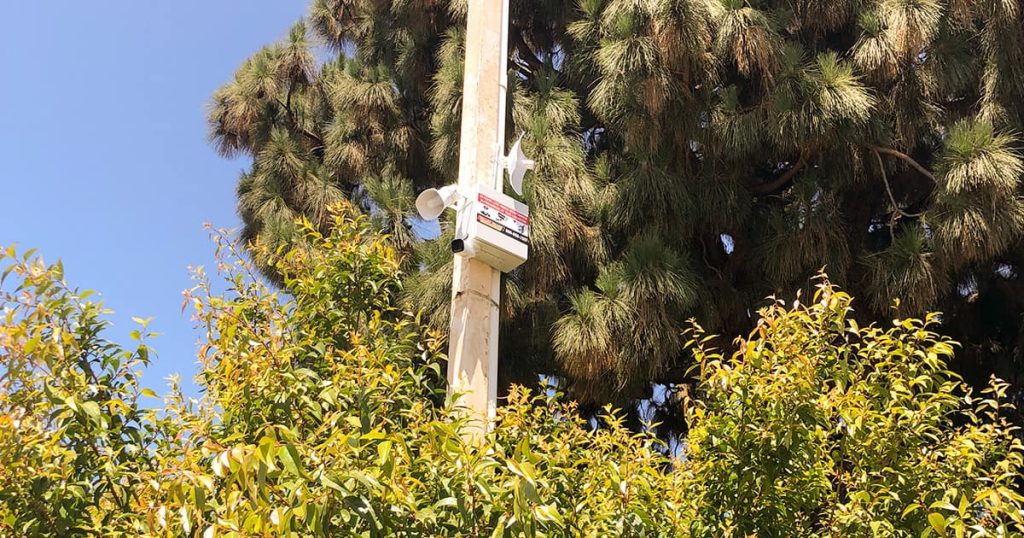
When intrusion is confirmed, Intervention Specialists activate on-site speakers:
"This is Valley Alarm security. You in the white shirt and black hat, are being recorded. Leave the property immediately."
The psychological impact of real-time human Response, realizing someone is watching and speaking directly to you right now, causes most intruders to flee. They expected passive recording, not active confrontation.
If audio warnings don't deter intruders, Intervention Specialists escalate by calling police with video verification.
They provide dispatch with real-time information: number of suspects, vehicle descriptions, specific location on the property, and what they're doing.
This verified intelligence results in faster Response and higher-priority treatment than standard alarm calls.
Detection at 2:17 AM. Verification by 2:17:05 AM. Audio warning at 2:17:10 AM. Police dispatch at 2:17:45 AM if intruders don't leave. All while the incident is actively unfolding.
This is what real-time construction site monitoring with verified alerts looks like in practice: AI detection, human verification, and instant intervention working together to stop threats before they become losses.
When Faster Response Changes the Outcome
Overnight Theft Attempts
Thieves cut fences, load equipment, and leave long before passive systems generate a notification. Real-time alerts catch intruders mid-act instead of discovering theft the next morning.
ValleyGuard monitoring data shows that 83% of intrusion attempts at tracked construction sites occur between midnight and 6 AM. The window matters.
At a ValleyGuard-monitored development site in Arcadia through Q4 2025, Intervention Specialists logged 12 confirmed incidents over the quarter.
Every incident was resolved by audio intervention alone. Not one required a police dispatch. Specialists detected the intrusion, issued a live warning, and cleared the site before the theft was completed.
The passive camera alternative looks different: footage is reviewed in the morning, equipment is already gone, recovery is statistically unlikely.
Stopping Active Attempts Mid-Act
Verified alerts don't just catch opportunistic trespassers. They catch organized attempts in progress.
At a North Hollywood construction site monitored by ValleyGuard, Intervention Specialists observed multiple individuals on Camera 7 in the early morning hours.
The individuals were hooking chains to a piece of on-site equipment. Audio warnings were issued immediately. When the intruders didn't leave, the Specialist contacted site management and dispatched LAPD.
All before the equipment could be moved. Police responded with a confirmed reference number and arrived while the scene was still active.
That kind of Response only happens when a trained Specialist is watching in real time. Passive recording would have captured the video attempt. The equipment would still be gone.
Vandalism and Property Damage
Property damage can shut down work zones for days while repairs are completed and inspections verify safety. Audio intervention cuts vandalism short, just as it stops theft.
An Intervention Specialist watching a live feed can issue warnings before damage is done, not after the crew arrives the next morning to find the job finished.
ValleyGuard records from Q4 2025 show that 100% of incidents at the Arcadia development site were resolved with audio warnings alone.
Every attempt ended with the intruder leaving rather than completing the act. Passive systems record the full damage because there is no one to interrupt it mid-act.
Trespassers and Unauthorized Access
Unauthorized access isn't just a risk of theft. It's a safety liability waiting to happen. Trespassers can injure themselves on construction hazards, creating legal exposure even when they entered illegally.
ValleyGuard Intervention Specialists don't just watch for thieves. They watch for anyone on-site who shouldn't be there.
An unauthorized person approaching an unguarded excavation or climbing partially completed framing is a liability event the moment they step on-site.
Specialists can issue audio warnings before someone reaches a hazard, then stay on the feed until the person has exited safely and flag the breach for site management. That real-time awareness is what separates monitoring from recording.
5 Technologies That Make Faster Response Possible
AI Analytics That Recognize Threat Profiles
AI filters out false positives and focuses on real threats by learning behavioral patterns that indicate intrusion rather than legitimate activity—such as human movement near fencing during off-hours.
Vehicle approach to restricted areas. Prolonged loitering near equipment storage. These get flagged immediately. Wind, animals, and passing traffic get filtered out.
This accuracy makes rapid Response practical. Intervention Specialists aren't buried in irrelevant alerts. They see only the genuine anomalies that require human judgment and potential Response.
US-Based Intervention Specialists
Trained, US-based Intervention Specialists reduce response time from hours to seconds.
When AI flags suspicious activity at your jobsite, a Specialist is already watching the feed within 3 to 5 seconds. They're not being woken up.
They're not checking phones between other tasks. They're actively monitoring from ValleyGuard's UL-listed center and ready to respond to your site alongside multiple others simultaneously.
Two-Way Audio Intervention
Thieves expect passive recording. When a voice addresses them directly, describes their specific actions, and warns of consequences, the realization that someone's watching right now triggers immediate retreat.
Professional-grade speakers project clearly across jobsites even in windy conditions.
Mobile Alerts for Project Managers
Verified incident notifications include video clips, Specialist notes about threat type and response actions taken, and real-time status updates as situations develop.
You can authorize additional actions remotely based on incident severity. You're not excluded from the response loop just because you're not on-site. The Response continues with or without your direct involvement, but you maintain oversight through mobile access.
Integrated Dispatch Coordination
When Intervention Specialists call 911, they don't just report an alarm. They give dispatchers the exact address, verified crime type, number of suspects, physical descriptions, vehicle information, whether the suspects appear armed, and the suspects' current position on the property.
This intelligence allows police to arrive prepared.
Verified dispatch also creates documentation that supports prosecution: timestamped video, Specialist testimony, and police response records, all in a single chain.
FAQs: Verified Alerts and Faster Threat Response
What is a "verified alert"?
A verified alert is a real-time confirmation of an actual threat that's been reviewed and validated by a trained Intervention Specialist before any notification is sent.
When AI detects suspicious activity, a Specialist immediately reviews live video to determine whether it represents a genuine intrusion or a false positive.
Only confirmed threats generate verified alerts sent to you or law enforcement. This eliminates the false alarm problem that makes standard motion alerts unreliable.
How fast can real-time systems respond?
Detection occurs within 3 to 5 seconds of suspicious activity beginning. Specialist verification takes another 3 to 5 seconds. Audio warnings can be issued within 10 to 15 seconds total.
Police dispatch with video verification happens within 30 to 60 seconds if audio deterrence doesn't work. Compare that to passive systems, where you discover incidents 4 to 12 hours after occurrence when you review morning footage.
Do verified alerts reduce false alarms?
Yes. AI filtering eliminates most false motion triggers before they reach a Specialist. Human verification catches the remaining false positives AI might miss.
You receive genuine threat notifications, not dozens of irrelevant alerts daily. This also prevents false-alarm fees from police departments that fine for excessive unverified calls.
Can real-time Response actually save equipment and time?
It can, because intervention occurs before intruders complete the act. When a Specialist issues live audio warnings as someone approaches your equipment, most attempts stop immediately.
Even when attempts escalate, rapid police dispatch limits the magnitude of loss.
Thieves grab one item and flee versus working undetected for 20 minutes. Project delays decrease because equipment stays on-site. Insurance claims drop because preventing theft doesn't require replacement.
Verified alerts mean every police call is for a confirmed threat in progress.
ValleyGuard Intervention Specialists visually verify every alert before dispatching police, giving your calls priority response. No false alarm fees. No ignored notifications. Serving construction sites across Greater Los Angeles since 1981.
Related Articles

- Remote Video Monitoring: The Complete Guide for Commercial Properties - August 13, 2026
- How Much Does Remote Video Monitoring Cost? - August 13, 2026
- Remote Video Monitoring for Apartment Complexes and Multi-Family Properties - August 13, 2026