
Remote Construction Site Protection: How to Secure Unmanned Jobsites Without Guards
Imagne: You show up Monday morning to the grading site 20 miles past the last subdivision. The equipment yard gate is open. Fuel tanks are empty—siphoned overnight. Generator cables are cut and missing. Your excavator is still there, but someone tried to hotwire it and damaged the ignition.
This is 40 miles from your office. There's no power on site yet. The nearest neighbor is half a mile away. Cell service barely works. And you just lost three days of productivity plus $4,000 in fuel and repairs because the site sat unprotected all weekend.
Remote construction site protection solves the exact problem that makes traditional security fail at unmanned locations: how do you monitor a jobsite with no power, no staff, and no infrastructure when guards can't patrol acres of undeveloped land effectively?
Sites in rural LA County, early-phase developments, and remote industrial locations face theft rates 40-60% higher than urban jobsites according to equipment theft reports—yet they typically receive less security investment because traditional solutions don't work without electrical service and nearby response capabilities.
Here's how Los Angeles contractors are implementing remote construction site protection using solar-powered cameras and live monitoring that works everywhere from hillside grading operations to off-grid equipment staging areas.
Why Remote Jobsite Security Is Unique and Harder
No Power, No Guards, No Constant Presence
Remote sites often lack grid power or staff, making traditional security setups infeasible. Running electrical service to a temporary grading operation costs $15,000-30,000 before you even install cameras. Guards won't accept assignments at isolated locations 30-50 miles from populated areas, and when they do, hourly rates increase 25-40% for remote duty.
Early-phase construction projects sit empty for weeks between permit approval and utility connection. Land development operations spread across dozens of acres with minimal site improvements. Equipment staging areas for pipeline or infrastructure work exist temporarily in locations that will never have permanent structures.
These conditions make wired camera systems impractical and guard patrols ineffective. A guard can patrol maybe 2-3 acres on foot. Your remote site might cover 20-40 acres of undeveloped terrain. The math doesn't work, which is why contractors managing unmanned jobsites need specialized remote construction site protection rather than conventional security approaches.
Opportunistic Thieves Target Unmanned Areas
Isolated locations are easier for thieves because noise and witnesses are minimal. Remote jobsites telegraph vulnerability—no lights at night, no traffic, no nearby residents who might notice unusual activity. Thieves know response times from law enforcement can exceed 20-30 minutes for rural locations versus 6-8 minutes in developed areas.
Fuel theft dominates remote site losses because diesel and gasoline are easy to siphon and impossible to trace. Copper wire and high-value hand tools disappear next. Heavy equipment theft requires more planning, but isolated sites give thieves the time they need to defeat GPS tracking and load machinery onto trailers without witnesses.
The pattern repeats: thieves survey during business hours, return after dark when sites are empty, and work methodically because no one's watching. Without active intervention, they'll hit the same location repeatedly until the project completes or security improves.
Passive Cameras Fall Short Without Monitoring
Cameras that just record are useless unless someone watches them—and off-site managers can't monitor every feed from distant locations. You'll review footage Monday morning showing exactly when thieves entered Friday night, exactly what they took, and exactly how long they spent on your property. But the equipment is still gone.
Recording creates evidence for police reports and insurance claims. It doesn't create protection. That's the fundamental failure of passive systems for remote construction site protection—they document theft instead of preventing it, and recovery rates for stolen equipment from remote locations drop below 15% because items disappear into rural markets before anyone realizes they're missing.
What Remote Construction Site Protection Looks Like
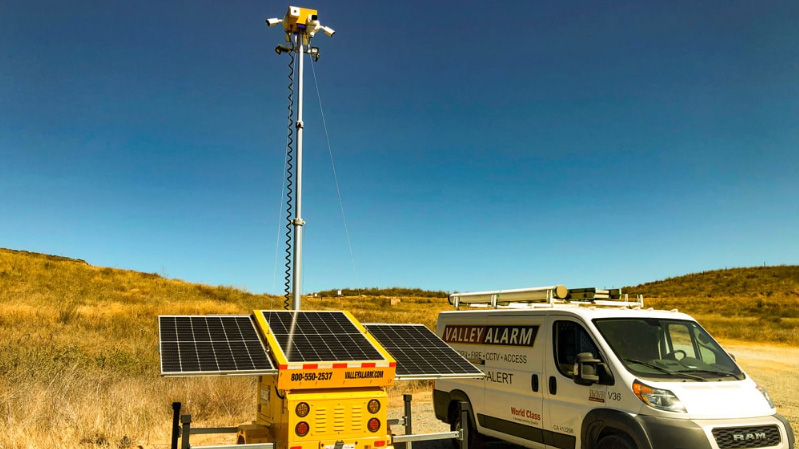
Solar-Powered Pole Camera Solutions
Pole-mounted surveillance systems with solar power provide off-grid video coverage that doesn't require site power infrastructure. These systems include battery banks sized for 5-7 days of operation without sunlight, ensuring continuous monitoring even during extended cloudy periods or winter months with shorter days.
Cameras mount 15-25 feet high on telescoping poles, providing sight lines across acres of open terrain that ground-level installations can't achieve. This elevation matters for early detection—operators see vehicles approaching from hundreds of yards away, not just when they've already breached the perimeter.
Solar panels charge during daylight hours while batteries power cameras, cellular modems, and audio warning systems overnight. The entire setup operates independently of electrical infrastructure, making remote jobsite security solutions viable for locations that won't have power for months.
Mobile Surveillance Trailers for Flexible Coverage
Trailer-mounted units with towers and cameras can be repositioned as projects evolve or moved between sites as work completes. A concrete plant finishing its installation phase can move the trailer to a new excavation project starting 40 miles away—protecting multiple projects with the same equipment instead of purchasing separate systems for each location.
These mobile units deploy in 24-48 hours compared to weeks for permanent installations. When Valley Alarm deployed a mobile security trailer to a remote industrial site in Castaic on October 6, 2025, the location presented exactly the challenges that make traditional security impractical: no power lines, limited cell coverage, and terrain that makes guard patrols ineffective.
The solar-powered trailer included four night-color cameras providing full site coverage, AI detection distinguishing between wildlife and actual threats, two-way audio for live intervention, cellular connectivity functioning even in weak signal areas, and permanent strobe lights for visibility. The entire system drew less power than a security guard's vehicle idling for a shift.
Within days of deployment, the system was detecting and deterring intrusion attempts that would have previously gone unnoticed until Monday morning damage assessments.
Remote Video Monitoring with Human Verification
Cameras link to remote operators who verify alerts in real time and escalate verified incidents to law enforcement or project managers. This is what effective remote construction site protection requires—not just recording, but active human oversight that responds when threats occur.
When AI detects suspicious activity at 2:00 AM at your remote grading site, operators review live feeds within 3-5 seconds, confirm whether activity represents genuine threats, and issue audio warnings through on-site speakers if intrusion is verified. Most intruders flee immediately upon realizing someone is watching and speaking to them in real time.
For the small percentage who don't leave after warnings, operators dispatch police with video verification of crime in progress, giving your remote location priority response despite distance from populated areas.
This is what construction site remote video surveillance with solar power and live monitoring looks like in practice—AI detection, human verification, and instant intervention working together regardless of site location or power availability.
Core Technologies That Make Remote Protection Work
Pole Cameras with Wireless Connectivity
Pole cameras provide high vantage points for broad coverage without infrastructure requirements. Cellular modems connect cameras to monitoring centers using 4G/5G networks—the same coverage that makes your phone work in rural areas powers security systems designed for remote construction site protection.
These systems don't rely on WiFi or hardwired internet connections. As long as cell service exists (even one or two bars), the cameras maintain connectivity. In areas with weak signal, high-gain antennas boost reception to usable levels.
The elevation advantage from pole mounting can't be overstated for remote sites. Ground-level cameras see 50-100 feet. Pole-mounted cameras at 20 feet elevation see 300-500 feet across flat terrain, and even farther across graded land. That sight distance translates to minutes of advance warning instead of seconds.
Solar Power and Battery-Backed Systems
Solar-powered construction cameras allow monitoring systems to run without external electricity. Modern solar panels generate sufficient power even during overcast conditions, and battery banks store enough reserve capacity to operate through extended cloudy periods.
Battery management systems prevent over-discharge that would damage cells, automatically shed non-critical loads if power runs low (dimming lights while maintaining camera operation), and prioritize cellular connectivity to maintain alarm capability even if recording capacity degrades.
These systems operate reliably in temperature extremes from desert heat to mountain cold. Weatherproof housings protect electronics from dust, rain, and impact. Solar panels continue generating power for years with minimal maintenance—no fuel costs, no generator servicing, no electrical bills.
AI Analytics and Intelligent Alerts
AI reduces noise and sends meaningful alerts to remote operators for verification. Without AI filtering, motion detection would trigger thousands of alerts daily from wind moving vegetation, animals crossing the property, cloud shadows, and passing traffic on distant roads.
AI learns normal baseline activity for each specific location over several days: vegetation movement patterns, wildlife corridors, regular vehicle traffic on nearby roads, weather-related motion. When activity deviates from these learned patterns—vehicle approach during off-hours, human movement near equipment, prolonged loitering—the system flags it for operator attention.
This intelligence prevents the alert fatigue that makes passive systems useless. You don't ignore notifications because 98% are false alarms. You pay attention because operators have already verified that flagged activity represents genuine threats.
Two-Way Audio and Remote Response
Systems allow live deterrence via speakers when threats are detected. Audio intervention stops theft before it progresses, eliminates the need for physical security presence, provides documented warnings that support trespassing prosecution, and costs nothing per use unlike guard dispatch fees.
When a San Fernando Valley concrete plant experienced security concerns in July 2025, they needed immediate protection for expensive mixing equipment, material storage areas, and cement delivery trucks parked overnight. Within two business days, Valley Alarm deployed pole-mounted remote video monitoring with AI detection and live audio intervention covering the entire perimeter.
The results: full coverage with zero blind spots, live audio deterrence activated from day one, no incidents of trespassing or vandalism, and peace of mind for site managers who had been worried about overnight damage.
Real Situations Where Remote Protection Prevents Loss
Rural Grading and Land Prep Sites
Hillside grading operations and land preparation projects exist in locations specifically chosen for low development—which also means low security infrastructure. These sites store diesel fuel for dozers and excavators, house expensive GPS-equipped grading equipment, and operate for months before any permanent structures exist.
Pole cameras and solar systems cover large tracts of undeveloped land without requiring electrical service or physical security presence. A 40-acre grading site needs 3-4 strategically positioned pole cameras to achieve complete perimeter coverage and monitor equipment staging areas. That same site would need 8-12 guards working overlapping shifts to patrol effectively—an impossible cost burden for temporary operations.
Contractors implementing remote construction site protection at grading operations report 85-95% reductions in fuel theft and equipment tampering compared to sites relying on periodic guard patrols or passive camera recording.
Off-Grid Foundation Work and Early Phases
Early project phases often lack utilities—pole cameras plus remote monitoring fill this gap. Foundation excavation, underground utility installation, and site preparation all happen before electrical service arrives. These phases also involve expensive equipment that sits unattended overnight in locations with no nearby supervision.
Solar-powered monitoring provides the same protection level during month one (no power, no fencing, no nearby structures) as month twelve when the project has full electrical service and occupied buildings. This continuity matters because thieves target early phases specifically, knowing security is typically weakest before buildings are enclosed.
Storage Yards and Material Staging
Portable units and pole cameras secure equipment and materials in temporary staging areas. Pipeline projects, transmission line construction, and infrastructure work use remote staging yards to position equipment and materials closer to work sites instead of transporting everything daily from central yards.
These staging areas exist temporarily—6 months, maybe 12—then disappear when projects complete. Permanent security infrastructure makes no sense. Mobile surveillance trailers provide full protection during the staging period, then redeploy to the next project when this one finishes.
For contractors managing projects across rural LA County, Antelope Valley, or the Inland Empire, one set of mobile surveillance equipment protects multiple projects sequentially instead of buying separate systems for each temporary location.
How Remote Monitoring Stopped Threats at Real LA County Sites
Castaic Industrial Site: Mobile Trailer Deployment
The Castaic deployment on October 6, 2025 demonstrated why mobile security trailers work for remote industrial operations. The location had no power infrastructure, limited cellular coverage, and terrain making guard patrols ineffective—exactly the conditions that exist at industrial sites throughout LA County's northern reaches where development pushes beyond municipal services.
The solar-powered trailer operated continuously from day one. Four night-color cameras provided perimeter coverage. AI analytics filtered environmental motion from genuine threats. Two-way audio speakers enabled live intervention when suspicious activity was detected. And cellular connectivity maintained communication with monitoring centers despite weak signal strength in the area.
This deployment joined hundreds of similar installations across LA County and the Inland Empire where contractors protect temporary projects, remote operations, and early-phase construction using mobile surveillance that doesn't depend on site infrastructure.
San Fernando Valley Concrete Plant: Rapid Response to Security Concerns
When the concrete plant called Valley Alarm with urgent security concerns—suspicious vehicles circling the yard, tensions among individuals with site access, and worry about overnight vehicle damage—they needed immediate protection for mixing equipment, material storage, and parked cement trucks.
The pole-mounted system deployed within two business days provided AI-powered threat detection filtering false alerts, live audio intervention stopping intruders before damage occurred, full incident reporting supporting insurance claims and law enforcement, and complete perimeter coverage with zero blind spots.
No incidents occurred after deployment. The visible cameras plus the knowledge that live operators were watching and could respond with audio warnings deterred the trespassing that had previously concerned site managers.
These cases demonstrate the pattern: remote locations need security solutions that work without infrastructure, mobile systems that deploy quickly when threats escalate, and active monitoring that intervenes instead of just recording.
FAQs: Remote Site Protection for Construction Jobsites
What is remote construction site protection?
Remote construction site protection uses solar-powered cameras and live monitoring to secure jobsites that have no electrical power, no on-site staff, and limited infrastructure. These systems operate independently using cellular connectivity and battery-backed solar power, making them ideal for rural locations, early-phase construction, and temporary operations where traditional wired security isn't feasible. Protection includes AI threat detection, human verification by trained operators, and live audio warnings that stop intrusions before theft occurs.
Can a site with no power be monitored 24/7?
Yes. Solar-powered construction cameras operate continuously using battery banks charged by solar panels during daylight hours. Modern systems store 5-7 days of reserve power, ensuring operation through extended cloudy periods or winter months with shorter days. The cameras, cellular modems, and audio systems draw minimal power—less than security lighting would consume—making solar operation reliable even in locations that will never receive electrical service.
How do pole cameras work without electricity?
Pole-mounted surveillance systems include integrated solar panels and battery banks that power all system components without external electrical connections. Solar panels charge batteries during daylight while batteries supply power overnight and during cloudy conditions. Cellular modems connect cameras to monitoring centers using 4G/5G networks, eliminating the need for WiFi or hardwired internet. The entire system operates independently of grid infrastructure, making it ideal for remote jobsite security solutions.
Are remote sites more vulnerable to theft?
Yes. Remote locations face 40-60% higher theft rates than urban jobsites according to equipment theft reports. Thieves target isolated sites because noise doesn't attract attention, witnesses are minimal, and law enforcement response times can exceed 20-30 minutes versus 6-8 minutes in developed areas. Remote sites also signal vulnerability through darkness and absence of activity overnight. However, active monitoring with live intervention eliminates these advantages—making remote sites just as protected as urban locations despite their isolation when proper remote construction site protection is implemented.
How long does deployment take for remote monitoring systems?
Mobile surveillance trailers deploy in 24-48 hours for immediate coverage. Pole-mounted permanent installations take 3-5 days for site assessment, positioning, installation, and testing. Emergency deployments after theft incidents or escalating security concerns can often expedite mobile unit placement to provide protection while comprehensive systems are implemented. Both options provide immediate monitoring from the moment deployment completes—no waiting periods for system learning or operator training.
Secure Unmanned Sites Without Guards or Power
Remote locations don't have to mean vulnerable locations. Solar-powered cameras plus live monitoring protect jobsites regardless of power availability, distance from populated areas, or infrastructure limitations.
Valley Alarm provides remote construction site protection for Los Angeles contractors managing off-grid sites, early-phase projects, and temporary operations across LA County, Antelope Valley, Ventura County, and the Inland Empire. Get 24/7 coverage that works everywhere your projects take you—no electrical service required.
Secure Remote Sites Without Power or Guards
Solar-powered monitoring covers unmanned jobsites across LA County—no electrical service required.
Related Content

- Securing Remote Cannabis Grows in Southern California - February 27, 2026
- Your Biggest Cannabis Security Threat Isn’t the Guy with the Ski Mask - February 27, 2026
- Why LA Dispensaries Keep Getting Robbed — And What Actually Stops It - February 27, 2026